Top 10 Myths About Chameleons Busted!
Chameleons have long been shrouded in mystery and misinformation. These unique reptiles, known for their ability to change color and their independently rotating eyes, have captivated the imaginations of people worldwide. Understanding these animals correctly is crucial for both their conservation and for those considering them as pets. Misconceptions can lead to improper care and even endangerment of these fascinating creatures. This article aims to clear up some of the most common myths about chameleons, providing accurate information based on scientific research.
Myth 1: Chameleons Change Color to Match Their Surroundings
The idea that chameleons change color to blend into their environment is one of the most widespread myths. In reality, chameleons change color primarily for communication, temperature regulation, and mood expression. Their specialized cells, called chromatophores, allow them to alter their appearance. These cells contain pigments that expand or contract, creating different hues. For example, a chameleon may display bright colors when it is excited or aggressive, while darker tones might indicate fear or submission.
Myth 2: All Chameleons Are Green
While green is a common color among chameleons, especially in popular media, they come in a wide array of colors and patterns. Species like the panther chameleon (Furcifer pardalis) showcase vibrant blues, reds, and yellows. The diversity in chameleon coloration is due to their need to communicate effectively within their social structures and environments. Each species has evolved specific patterns and colors to suit its habitat and survival needs.
Myth 3: Chameleons Can Shoot Their Tongues Out Like a Harpoon
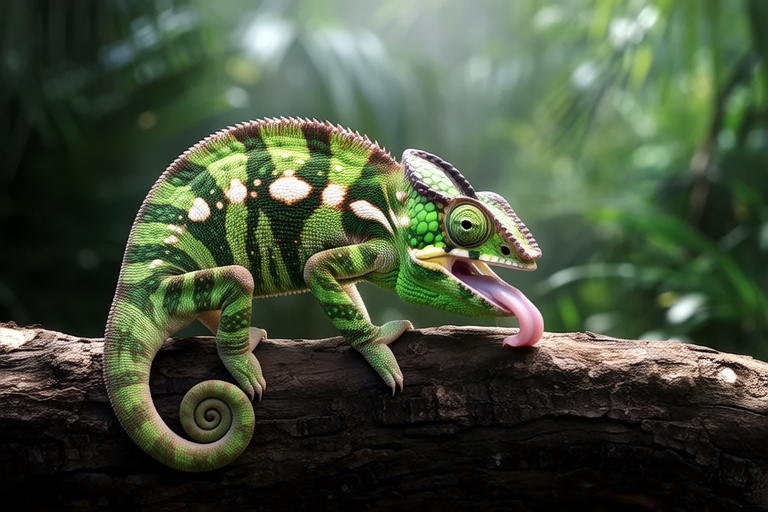
Chameleons indeed have remarkable tongues, capable of extending up to twice their body length to catch prey. However, this process is more akin to a sticky projectile than a harpoon. The tongue’s tip is covered in a specialized adhesive that helps capture insects mid-air. This adaptation is a marvel of evolutionary engineering, allowing chameleons to feed efficiently without having to move from their perch.
Myth 4: Chameleons Live in Deserts
Contrary to popular belief, chameleons are not desert dwellers. Most species prefer tropical rainforests and savannas where they can find adequate humidity and a diverse array of insects for food. The majority of chameleon species are native to Madagascar, which provides the ideal humid and warm conditions they require. Desert habitats lack the necessary moisture levels and vegetation that chameleons need to thrive.
Myth 5: Chameleons Are Easy to Care For as Pets
Maintaining a chameleon as a pet requires significant expertise and dedication. Unlike many other reptile pets, chameleons have very specific environmental needs, including appropriate lighting, temperature gradients, and humidity levels. They also require a varied diet of live insects. Improper care can lead to health issues, underscoring the importance of thorough research before acquiring a chameleon.
Myth 6: Chameleons Only Eat Bugs
While insects form a large part of a chameleon’s diet, they are not the only source of nutrition. In the wild, chameleons will also consume small vertebrates, such as lizards and birds, as well as plant matter. Pet chameleons, however, are typically fed a diet of crickets, mealworms, and other commercially available insect species. Supplementing their diet with vitamins and minerals is essential to ensure their health.
Myth 7: Chameleons Are Nocturnal
Chameleons are diurnal creatures, meaning they are active during the day. They rely heavily on visual cues for hunting and social interactions, which would be difficult at night. Their eyesight is one of the most advanced among reptiles, allowing them to detect movement and judge distances accurately. This visual acuity is crucial for their daytime activities.
Myth 8: Chameleons Don’t Need Social Interaction
Chameleons are solitary animals, but this does not mean they do not interact with their environment. They are highly territorial and will often display aggressive behavior towards other chameleons. In captivity, it is important to provide each chameleon with its own enclosure to prevent stress and potential injuries. However, they do respond to their surroundings and can become accustomed to human interaction if handled gently and regularly.
Myth 9: Chameleons Have Poor Eyesight
Chameleons actually have excellent eyesight, which is one of their most distinguishing features. Each eye can rotate independently, allowing them to see in two different directions simultaneously. This unique capability enables them to spot potential threats or prey without moving their head, conserving energy. Their vision is so precise that they can focus on objects as small as a single ant from several meters away.
Myth 10: Chameleons Can Survive Without Water
Chameleons require water for hydration just like any other animal. While they can obtain some moisture from the insects they eat, they still need regular access to water. In the wild, they drink droplets from leaves after rainfall or morning dew. In captivity, misting systems or drippers are commonly used to provide them with fresh water daily. Dehydration can lead to serious health problems and should be avoided.
Conclusion: Tips for Potential Chameleon Owners and Enthusiasts
If you’re considering owning a chameleon or simply want to learn more about these amazing creatures, there are several steps you can take:
- Research extensively: Before bringing a chameleon home, study its specific dietary and environmental needs.
- Visit local reptile expos: These events offer opportunities to meet experienced breeders and veterinarians who can provide valuable advice.
- Join online communities: Forums and social media groups dedicated to chameleons can be great resources for learning and sharing experiences.
- Consider adopting rather than purchasing: Many shelters and rescues house chameleons that need homes.
By approaching chameleons with respect for their unique biology and behaviors, we can better appreciate these incredible animals and contribute positively to their welfare.
