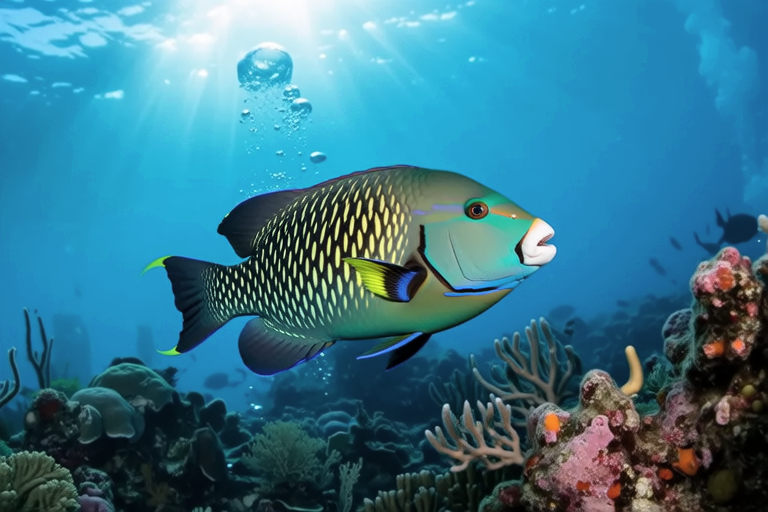
Exploring the Hidden World of Parrot Fish: A Visual Journey
Welcome to a fascinating exploration of one of the ocean’s most colorful and intriguing inhabitants: the parrot fish. These remarkable creatures, known for their vibrant hues and distinctive beak-like mouths, play a crucial role in maintaining the health of coral reefs, which are some of the most diverse ecosystems on Earth. In this article, we will delve into the world of parrot fish, examining their unique characteristics, behaviors, and the challenges they face in today’s changing oceans.
The Unique Characteristics of Parrot Fish
Parrot fish are members of the family Scaridae, a group of approximately 90 species found primarily in tropical and subtropical waters around the world. They are easily recognizable by their distinctively shaped heads, which feature a strong jaw lined with small, sharp teeth that form a beak-like structure. This adaptation allows them to scrape algae and other organisms from coral surfaces, playing a vital role in reef maintenance.
One of the most striking features of parrot fish is their dazzling array of colors and patterns. Many species display a kaleidoscope of hues, ranging from electric blues and greens to fiery reds and oranges, often with intricate designs that can resemble the feathers of exotic birds. As these fish grow and mature, their appearance undergoes significant changes. Juvenile parrot fish often exhibit camouflage patterns designed to blend in with their surroundings, helping them avoid predators. However, as they reach adulthood, these same fish develop the vibrant, eye-catching colors for which they are famous.
The Ecological Role of Parrot Fish
Parrot fish are not just visually stunning; they also serve as important ecosystem engineers. Their diet primarily consists of algae that grow on coral reefs, and through their feeding habits, they help maintain the balance of the reef community. By grazing on algae, parrot fish prevent it from overgrowing and smothering corals, ensuring that the delicate coral polyps have enough light and space to thrive. Additionally, their digestion process produces sand, contributing to the formation and maintenance of beaches.
Feeding Habits and Social Interactions
Parrot fish are primarily herbivorous, feeding on a variety of algae that grow on rocks, coral, and other surfaces within the reef. Using their beak-like mouths, they scrape off layers of algae, consuming both the plant material and the calcium carbonate that forms the hard surface of coral skeletons. This feeding behavior not only provides sustenance for the fish but also helps to keep the reef clean and healthy.
While many parrot fish species are solitary or live in pairs, some species exhibit complex social structures. For instance, certain species gather in large schools, especially during mating season, when males establish territories and compete for females. These gatherings can create a mesmerizing spectacle, with groups of brightly colored fish moving in unison through the water. The social interactions among parrot fish are often influenced by factors such as food availability, competition, and predator presence.
Habitats and the Importance of Coral Reefs
Parrot fish are most commonly found in coral reefs, which are some of the most biologically rich and diverse ecosystems on the planet. Coral reefs provide a habitat for thousands of species, including fish, crustaceans, mollusks, and countless microorganisms. These underwater gardens are formed by tiny coral polyps that secrete calcium carbonate, creating the hard structures that serve as the foundation for the reef.
The importance of coral reefs cannot be overstated. They act as nurseries for many marine species, offering shelter and protection from predators. They also serve as natural barriers, protecting coastlines from storm damage and erosion. Furthermore, coral reefs contribute significantly to the global economy through tourism, fishing, and pharmaceutical research. Despite their vital role, coral reefs are under threat from various human activities, including pollution, overfishing, and climate change.
Challenges Facing Parrot Fish Populations
Despite their importance to marine ecosystems, parrot fish populations are facing numerous challenges. Overfishing is one of the most significant threats, as these fish are highly valued for their meat and are often targeted by commercial and recreational fisheries. Habitat destruction, particularly the degradation of coral reefs due to pollution and climate change, further exacerbates the problem. Rising sea temperatures and ocean acidification can lead to coral bleaching and death, reducing the available habitat for parrot fish and diminishing their food sources.
Moreover, some species of parrot fish are particularly vulnerable to overexploitation because they aggregate in large schools during spawning, making them easy targets for fishermen. The loss of these aggregations can disrupt breeding cycles and reduce population sizes, leading to long-term declines in parrot fish numbers.
Conservation Efforts
In response to the threats faced by parrot fish, various conservation efforts are underway. Marine protected areas (MPAs) have been established in many regions to safeguard critical habitats and allow fish populations to recover. These protected zones restrict fishing activities, giving parrot fish and other marine species a chance to thrive without the pressure of human exploitation.
Educational campaigns aimed at raising awareness about the importance of parrot fish and the need for sustainable fishing practices are also being implemented. These initiatives encourage responsible behavior among both fishermen and consumers, promoting the adoption of eco-friendly fishing methods and the purchase of sustainably sourced seafood.
Research into the biology and ecology of parrot fish is ongoing, providing valuable insights that can inform conservation strategies. Scientists are studying the effects of environmental changes on parrot fish populations and exploring ways to mitigate these impacts. Through a combination of scientific research, policy implementation, and public engagement, there is hope that parrot fish populations can be stabilized and even restored in some areas.
A Reflection on Beauty and Significance
Parrot fish are truly remarkable creatures, both in terms of their appearance and their ecological importance. Their vibrant colors and intricate patterns make them a visual delight, while their role in maintaining the health of coral reefs underscores their significance in marine biodiversity. By appreciating the beauty and complexity of these fish, we are reminded of the interconnectedness of all life in the ocean.
As stewards of our planet, it is our responsibility to protect these fragile ecosystems and the creatures that call them home. By supporting conservation efforts and advocating for sustainable practices, we can help ensure that future generations will continue to marvel at the wonders of the ocean, including the enchanting world of parrot fish.
In conclusion, parrot fish are more than just colorful curiosities; they are essential components of a vast and intricate web of life. Let us strive to understand and respect the delicate balance of marine ecosystems, recognizing the beauty and importance of these incredible creatures. Together, we can work towards a healthier and more vibrant ocean for all.
