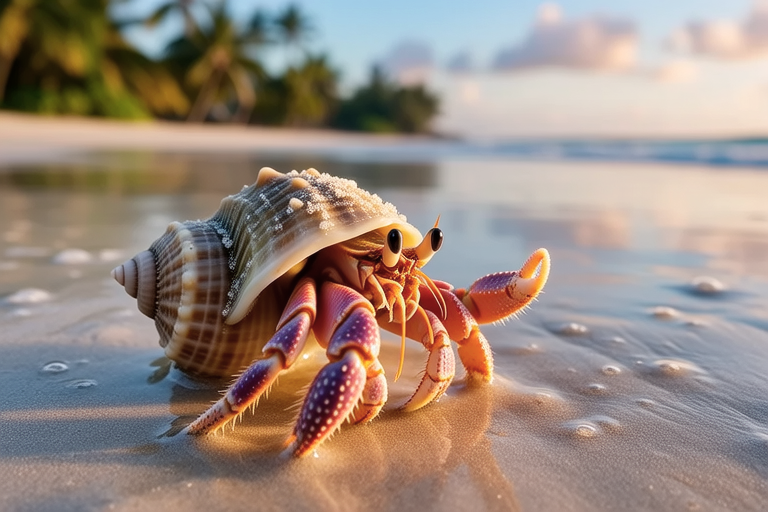
The Intriguing Lives of Hermit Crabs: A Journey into Unusual Behaviors and Hidden Aspects
Hermit crabs, often overlooked in the vast oceanic realm, possess a wealth of fascinating behaviors and adaptations that make them a subject of intrigue for marine biologists and nature enthusiasts alike. These crustaceans, known for their unique lifestyle of inhabiting discarded mollusk shells, have evolved a series of complex behaviors and physiological adaptations that enable them to thrive in diverse environments. This article delves into the lesser-known aspects of hermit crab life, including their shell-changing rituals, social interactions, nocturnal activities, methods of communication, dietary habits, adaptation strategies, and debunking some common myths about these creatures.
Shell-Changing Rituals: A Test of Tenacity and Strategy
One of the most captivating aspects of hermit crab life is their shell-changing ritual. As they grow, hermit crabs outgrow their current shells and must find new, larger ones to protect their soft abdomens. This process is fraught with challenges and requires strategic thinking. Hermit crabs are highly selective when it comes to choosing a new home, evaluating factors such as size, shape, and weight. They often engage in competitive behavior, sometimes fighting other crabs for the best available shell. The shell-changing process itself can be a delicate dance, with the crab carefully maneuvering its body into the new shell while ensuring a snug fit. Scientists have observed that some species even engage in cooperative behavior, helping each other by holding onto the old shell until the new one is secure.
Social Interactions: A Community of Shared Spaces
Contrary to popular belief, hermit crabs are not solitary creatures. They form complex social structures within their communities, often sharing spaces and resources. In some cases, multiple hermit crabs may live in close proximity, forming what appears to be a rudimentary society. These interactions can range from peaceful coexistence to more aggressive behavior, particularly during times of resource scarcity. Research has shown that hermit crabs exhibit a hierarchy based on size and strength, with larger individuals often dominating smaller ones. However, there are instances where smaller crabs will form alliances to challenge larger competitors, showcasing the complexity of their social dynamics.
Nocturnal Activities: The Nightlife of Hermit Crabs
Hermit crabs are predominantly nocturnal, emerging from their shells at night to forage for food and engage in other activities. During the day, they retreat into the safety of their shells, conserving energy and avoiding predators. This nocturnal lifestyle allows them to take advantage of less competition for resources and reduced predation risk. Scientists have used various techniques, including underwater cameras and acoustic monitoring, to study hermit crab behavior during their active periods. Observations have revealed that hermit crabs are quite active during the night, exploring their surroundings, scavenging for food, and interacting with other members of their community. Their nighttime activities are crucial for survival, enabling them to gather nutrients and maintain their energy levels.
Methods of Communication: The Language of Hermit Crabs
Despite their small size, hermit crabs have developed sophisticated methods of communication to interact with their environment and each other. One of the primary means of communication is through chemical signals, which they release into the water. These chemical cues can convey information about food sources, potential threats, or mating opportunities. Additionally, hermit crabs use tactile communication, tapping or rubbing their claws against objects or other crabs to signal their presence or intentions. Some species also produce sound by scraping their pincers against their shells, creating a distinct clicking noise that can be heard over short distances. These communication methods allow hermit crabs to coordinate their activities, avoid danger, and increase their chances of survival in their complex marine environment.
Dietary Habits: Feeding Strategies in Various Environments
Hermit crabs are opportunistic feeders, adapting their diets to suit the availability of resources in their environment. While they primarily consume organic matter, such as algae, decaying plant material, and dead animals, their feeding habits can vary depending on the ecosystem they inhabit. In coral reef environments, hermit crabs may scavenge for food among the intricate network of coral structures, searching for small invertebrates or detritus. In sandy or muddy habitats, they may burrow into the substrate to uncover buried prey or ingest sediment rich in microorganisms. Some species have even been observed preying on small fish or crustaceans, showcasing their versatility as hunters. Understanding the dietary habits of hermit crabs is essential for assessing their role in marine ecosystems and the impact of environmental changes on their survival.
Adaptation Strategies: Thriving in Diverse Ecosystems
Hermit crabs have demonstrated remarkable adaptability, thriving in a wide range of marine and terrestrial environments. From tropical coral reefs to temperate intertidal zones, these creatures have evolved specific traits and behaviors to survive in their respective habitats. For example, hermit crabs living in shallow waters near shorelines have adapted to periodic exposure to air during low tide, developing gills that can function both in water and on land. Those inhabiting deeper waters have developed longer legs and more streamlined bodies to navigate the currents efficiently. Additionally, some species have evolved specialized appendages for grasping and manipulating objects, enhancing their ability to forage for food and defend themselves against predators. These adaptations highlight the resilience and flexibility of hermit crabs in the face of changing environmental conditions.
Myths and Misconceptions: Separating Fact from Fiction
Throughout history, hermit crabs have been the subject of numerous myths and misconceptions, some of which persist to this day. One common myth is that hermit crabs abandon their shells when they die, leaving behind an empty husk. In reality, hermit crabs typically remain in their shells until they are physically removed, either by scavengers or natural decomposition processes. Another misconception is that hermit crabs are harmful to their hosts, the snails whose shells they occupy. However, research has shown that hermit crabs provide a mutual benefit to the snails by protecting the empty shells from damage or theft. By debunking these myths, we can gain a clearer understanding of the true nature of hermit crabs and appreciate their important role in marine ecosystems.
In conclusion, hermit crabs are far more than just curious inhabitants of discarded shells. Their unique behaviors, social interactions, nocturnal activities, methods of communication, dietary habits, and adaptation strategies paint a picture of complex and fascinating creatures. Through scientific exploration and observation, we continue to uncover new insights into the lives of these marine marvels, enriching our understanding of the incredible diversity of life in the world’s oceans.
