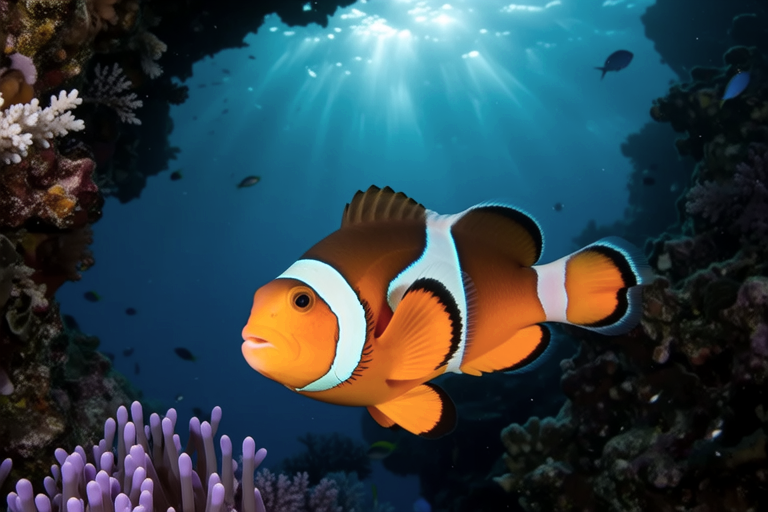
The Hidden World of Clownfish
Imagine diving into the vibrant, bustling world of the ocean’s coral reefs. Among the colorful corals and darting fish, one small, striking figure stands out: the clownfish. These iconic fish, known for their vibrant orange bodies and white stripes, have captured the hearts of many. But beyond their charming appearance lies a complex, intricate life story that is as fascinating as it is vital to the marine ecosystem.
Natural Habitats
Clownfish, scientifically known as Amphiprioninae, primarily inhabit the warm waters of the Indian and Pacific Oceans. They thrive in shallow lagoons and seaward reefs, often found at depths ranging from 1 to 15 meters. The most common species, the orange clownfish (Amphiprion percula), is native to the Great Barrier Reef and the Indo-Pacific region. Their preferred habitat is close to the surface, where they can find shelter among the tentacles of their symbiotic partners, sea anemones.
Social Structures Within Anemone Communities
Clownfish live in tight-knit families within the protective embrace of sea anemones. Anemones provide a safe haven from predators, as their stinging tentacles deter most would-be attackers. In return, clownfish offer protection against grazing herbivores that might otherwise damage the anemone. This mutually beneficial relationship is known as symbiosis.
Within each anemone, there is a clear hierarchy. A single breeding pair dominates the group, with the female being the larger of the two. Below them are non-breeding males and juveniles. The dominant female controls the group’s activities, while the male assists in caring for eggs and larvae. When the dominant female dies, the largest male takes her place, transitioning into a female, a process known as sequential hermaphroditism.
Unique Mating Behaviors
Clownfish reproduction is a carefully orchestrated dance. Breeding pairs perform elaborate courtship rituals, which involve chasing each other around the anemone and nudging one another. The female lays thousands of eggs on a flat surface near the anemone, typically during the night. The male then fertilizes the eggs by passing over them and fanning water over them to keep them oxygenated.
The incubation period lasts about six to ten days. During this time, both parents are highly vigilant, protecting the eggs from predators and ensuring they remain free from debris. Once hatched, the larvae float away on ocean currents, eventually settling on a suitable anemone host if they are fortunate.
Diet and Communication
Clownfish are omnivorous, feeding on algae, plankton, and small invertebrates. Their diet helps maintain the balance of nutrients within their reef ecosystems. Communication between clownfish is essential for survival. They use a combination of visual signals, body movements, and sounds to convey messages. For instance, they may flash their fins or make clicking noises to alert others of potential danger.
Challenges in the Wild
Despite their adaptability, clownfish face numerous challenges in the wild. One of the most pressing issues is climate change, which leads to rising sea temperatures and more frequent coral bleaching events. As corals die off, the anemones that rely on them for nutrients also suffer, leaving clownfish without their primary habitat and food source.
Ocean acidification, caused by increased carbon dioxide levels in the atmosphere, poses another significant threat. Acidic waters weaken the calcium carbonate structures of anemones, making them more susceptible to damage. This not only affects the health of the anemones but also impacts the clownfish that depend on them for protection.
Fascinating Facts About Their Relationship With Sea Anemones
The relationship between clownfish and sea anemones is one of nature’s most remarkable examples of symbiosis. Clownfish secrete a mucus layer on their skin that protects them from the anemone’s stinging cells, known as nematocysts. This allows them to live safely among the tentacles, where they are well-protected from predators.
In addition to providing protection, clownfish also help to clean the anemone by removing parasites and dead tissue. Some species of clownfish even engage in a behavior called ‘anemone fanning,’ where they swim vigorously near the anemone to increase water circulation and bring in more nutrients.
Role in the Ecosystem
Clownfish play a crucial role in maintaining the health of their reef ecosystems. By controlling the population of small invertebrates, they help to prevent overgrazing of algae, which could otherwise smother the coral. Additionally, their presence attracts other species, contributing to the overall biodiversity of the reef.
Recent Scientific Discoveries
Recent studies have shed new light on clownfish behavior and biology. Researchers have discovered that clownfish have a unique ability to detect changes in water chemistry, allowing them to avoid areas with high levels of pollution. This sensitivity could be key to their survival in the face of environmental challenges.
Another exciting discovery is the role of clownfish in promoting the growth of certain types of algae. By consuming specific algae species, they create conditions that favor the growth of others, contributing to the overall health of the reef.
Moreover, scientists have found that clownfish exhibit a form of ‘social learning.’ Juveniles learn important survival skills, such as identifying safe anemone hosts, by observing and mimicking the behaviors of older fish.
Conclusion
The clownfish’s world is a delicate balance of cooperation, survival, and adaptation. Their relationship with sea anemones is a testament to the intricate web of life in the ocean. As we continue to explore and understand these fascinating creatures, it becomes increasingly clear that their survival is intertwined with the health of our planet’s oceans. By raising awareness and supporting conservation efforts, we can help ensure that these vibrant, resilient fish continue to thrive in their hidden underwater world.
