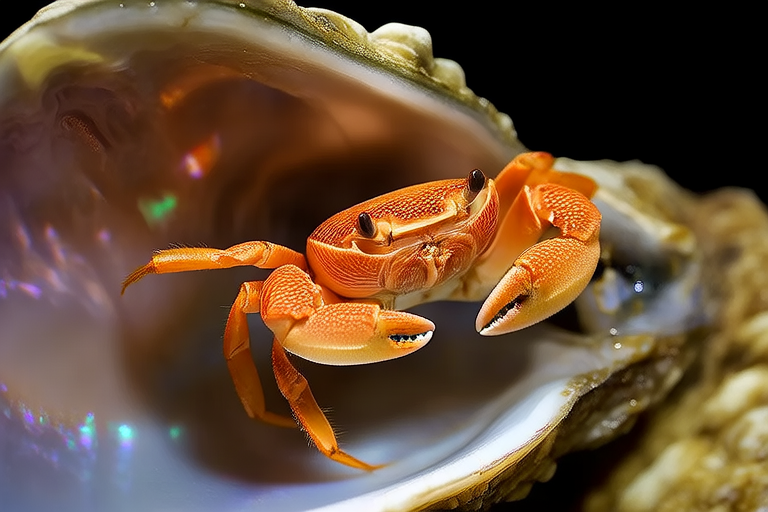
Tiny but Mighty: How Pea Crabs Survive by Hiding in Their Hosts
In the vast ocean, where survival is often a matter of size and strength, there exists a creature that defies these norms. The pea crab (Pinnotheres), despite its diminutive size, has evolved a remarkable survival strategy: living as a permanent guest within the protective shells of bivalves such as mussels and clams. This article delves into the fascinating world of pea crabs, exploring their symbiotic relationships, unique adaptations, and the significance of their existence in marine ecosystems.
The Unique Survival Strategy of Pea Crabs
Pea crabs have developed a niche that few other species can claim: living within the confines of a bivalve’s shell. These tiny crustaceans, typically no larger than a fingernail, enter the shell of their host during their juvenile stage and remain there throughout their lives. Their survival hinges on their ability to coexist harmoniously with their host, a relationship that benefits both parties. While the pea crab finds protection from predators and a steady supply of food, the host receives some form of protection from parasites and potential predators, thanks to the presence of the crab.
Symbiotic Relationship with Bivalve Hosts
The relationship between pea crabs and their bivalve hosts is a classic example of mutualism, a type of symbiosis where both organisms benefit. Pea crabs are known to inhabit various species of bivalves, including mussels, clams, oysters, and scallops. They enter the host’s mantle cavity, a space behind the gills, where they can feed on nutrients secreted by the host or consume detritus and microorganisms present in the water.
Interestingly, while pea crabs are generally non-destructive, there are instances where they can influence their host’s physiology. For instance, they may stimulate the host’s feeding behavior, indirectly benefiting themselves by ensuring a constant food supply. However, pea crabs have evolved to avoid damaging their host, maintaining a delicate balance that ensures the longevity of both organisms.
Adaptations for Life in a Confined Space
The most striking adaptation of pea crabs is their small size, which allows them to fit comfortably within the limited space of their host’s shell. This miniaturization is crucial for their survival, as it reduces competition for resources and minimizes the risk of being ejected by the host. Additionally, pea crabs possess highly flexible bodies, enabling them to maneuver within the tight confines of the bivalve’s shell. Their legs are adapted for grasping onto the internal structures of the host, ensuring stability even when the host moves.
Pea crabs also exhibit a range of other adaptations that enhance their survival within their hosts. For example, their eyes are positioned on stalks, allowing them to monitor their surroundings and detect potential threats. Furthermore, their exoskeletons are soft and pliable, preventing damage to the host’s tissues while still providing adequate protection against external threats.
Reproduction and Life Cycle within Hosts
The reproductive cycle of pea crabs is closely tied to their symbiotic relationship with their hosts. Mating typically occurs within the host’s shell, with male and female crabs residing side by side. After mating, the female carries her eggs on her abdomen until they hatch. The larvae then leave the host to find new homes, repeating the cycle of entering a bivalve and establishing a new symbiotic relationship.
One of the most intriguing aspects of pea crab reproduction is the phenomenon of simultaneous hermaphroditism in some species. This means that individuals possess both male and female reproductive organs, increasing the chances of successful reproduction even in the absence of a mate. This adaptation is particularly advantageous in environments where finding a suitable partner might be challenging.
The Importance of Studying Pea Crabs
Understanding the life of pea crabs provides valuable insights into marine ecology and symbiosis. By studying these tiny creatures, scientists can gain a deeper appreciation for the intricate relationships that exist within marine ecosystems. For instance, research on pea crabs has contributed to our understanding of how symbiotic relationships can evolve and persist over time.
Moreover, the study of pea crabs has practical applications in aquaculture and fisheries. Understanding the factors that influence the distribution and abundance of pea crabs can help farmers and fishers manage their resources more effectively. For example, knowing how environmental changes affect pea crab populations can inform strategies for protecting vulnerable bivalve species.
In conclusion, pea crabs exemplify the beauty and complexity of nature. Despite their small size, these creatures play a significant role in marine ecosystems, demonstrating the power of cooperation and adaptation. As we continue to explore the oceans and learn more about the creatures that inhabit them, the story of the pea crab serves as a reminder of the importance of symbiosis and the delicate balance that exists in nature.
