Surviving the Wild: Insights Into the Natural Habitat and Survival Tactics of the Heterometrus Spinifer
The world of insects is vast and diverse, with each species adapting uniquely to its environment. Among these, the Heterometrus spinifer stands out as a fascinating subject. This article delves into the natural habitat, physical characteristics, hunting behaviors, dietary preferences, and defense mechanisms of the Heterometrus spinifer, providing a comprehensive overview that will captivate enthusiasts and experts alike.
Natural Habitat and Preferred Climates
The Heterometrus spinifer, commonly known as the Asian forest scorpion, thrives in tropical and subtropical regions across Southeast Asia. These areas include countries like India, Sri Lanka, and parts of China. The species prefers humid, warm climates where temperatures typically range between 24°C and 32°C (75°F to 90°F). It is predominantly found in dense forests, bamboo thickets, and rocky areas. Scorpions are nocturnal creatures, spending their days hidden under rocks, logs, or in crevices, and venturing out at night to hunt.
Forests rich in biodiversity provide ample cover and prey for the Heterometrus spinifer. The moist environment ensures that the scorpion’s exoskeleton remains hydrated, preventing it from drying out. Moreover, the abundance of hiding spots in such environments allows the scorpion to avoid predators and regulate its body temperature by seeking shade during the hottest part of the day.
Physical Characteristics Aiding Survival
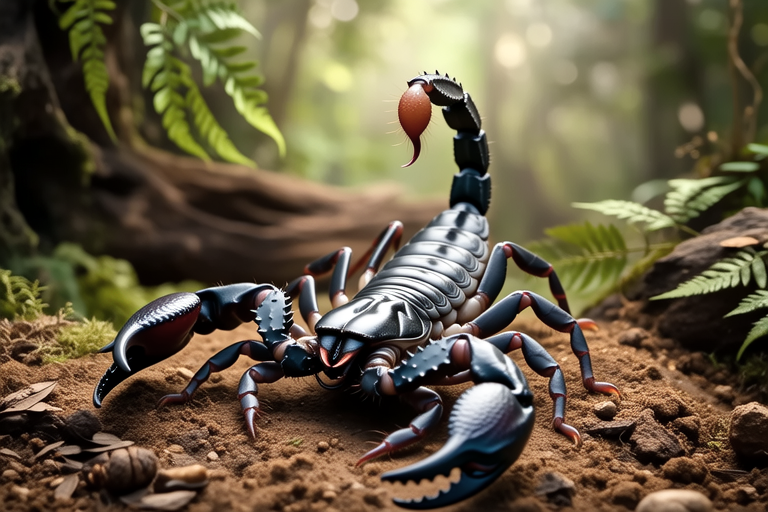
The Heterometrus spinifer possesses several physical attributes that enhance its survival in the wild. Its flattened body, ranging from 8 to 13 centimeters in length, enables it to squeeze into tight spaces for shelter and ambush prey. The scorpion’s coloration, usually brown or dark green, provides excellent camouflage among leaf litter and bark, making it difficult for both prey and predators to spot.
The most distinctive feature of the Heterometrus spinifer is the pair of large claws, or pedipalps, located near its mouth. These claws are used for grasping prey and delivering venomous stings. The tail, which houses the venom gland, curves up over the back and ends in a sharp, curved stinger. This structure allows the scorpion to strike quickly and accurately, injecting venom into its victim.
Additionally, the scorpion’s sensory organs are highly developed. It has specialized hairs called trichobothria on its legs, which detect vibrations in the air and ground. These help the scorpion locate potential threats or prey even in complete darkness. The pectines, small comb-like structures beneath the abdomen, are sensitive to chemical cues, allowing the scorpion to navigate its surroundings and find mates.
Hunting Behaviors and Dietary Preferences
The Heterometrus spinifer is a carnivorous predator, primarily feeding on insects, spiders, and other arthropods. It is an opportunistic feeder, taking advantage of whatever prey crosses its path. The scorpion’s hunting technique involves patience and precision. It waits in ambush, often hidden within its burrow or under a rock, until a suitable target comes within reach.
Once a potential meal is detected, the scorpion uses its powerful pedipalps to grab and immobilize the prey. It then injects venom through its stinger, paralyzing or killing the victim. This venom contains neurotoxins that disrupt the prey’s nervous system, ensuring a swift and efficient kill. Afterward, the scorpion uses its strong jaws to tear apart the prey and consume it.
While the venom is potent enough to subdue most small animals, the Heterometrus spinifer occasionally faces challenges when hunting larger prey. In such cases, it may employ a different strategy, repeatedly stinging the target until it succumbs. Despite being venomous, the scorpion is not aggressive toward humans unless provoked. However, it is essential to exercise caution around them, as their sting can be painful and potentially dangerous to those allergic to scorpion venom.
Defense Mechanisms Against Predators
Like many other scorpion species, the Heterometrus spinifer employs various defense mechanisms to protect itself from predators. One of the primary defenses is its ability to release a foul-smelling spray from glands near the base of its tail. This spray, composed of a mixture of chemicals, serves as a deterrent to predators, causing irritation and discomfort. Additionally, the scorpion may feign death or play dead when threatened, reducing the likelihood of becoming a meal.
The Heterometrus spinifer also relies on its speed and agility to escape danger. If cornered, it can rapidly retreat or attempt to sting its attacker. Its burrowing skills allow it to create underground shelters, providing refuge from predators and harsh weather conditions. Furthermore, the scorpion’s nocturnal habits reduce the risk of encountering daytime predators, such as birds and reptiles.
Unique Adaptations and Survival Tactics
The Heterometrus spinifer exhibits several unique adaptations that contribute to its survival in the wild. One notable adaptation is its ability to regenerate lost limbs. If a leg is damaged or severed, the scorpion can regrow it over time. This capability is crucial for maintaining mobility and hunting efficiency.
Another remarkable adaptation is the scorpion’s ability to withstand long periods without food. During times of scarcity, the Heterometrus spinifer can slow down its metabolism, conserving energy and extending the time it can survive without eating. This trait is particularly useful during dry seasons or when prey populations are low.
Moreover, the scorpion’s reproductive strategy is well-suited to its environment. Females carry their young on their backs for several weeks after birth, protecting them until they are old enough to fend for themselves. This parental care increases the chances of offspring survival, ensuring the continuation of the species.
Conservation Efforts and Future Prospects
The Heterometrus spinifer plays a vital role in its ecosystem by controlling insect populations and serving as prey for larger animals. However, habitat destruction and climate change pose significant threats to its survival. Conservation efforts focus on preserving natural habitats and raising awareness about the importance of these species.
Efforts to protect the Heterometrus spinifer and its environment include establishing protected areas, promoting sustainable land-use practices, and conducting research to better understand the species’ biology and behavior. By supporting these initiatives, we can ensure the continued existence of the Heterometrus spinifer and the ecosystems it inhabits.
In conclusion, the Heterometrus spinifer is a remarkable creature with a complex set of adaptations that enable it to thrive in its natural habitat. From its physical characteristics and hunting behaviors to its defense mechanisms and unique survival tactics, every aspect of its life is finely tuned for success in the wild. Understanding and appreciating these aspects not only enriches our knowledge of the natural world but also underscores the importance of conservation efforts to protect this fascinating species.
