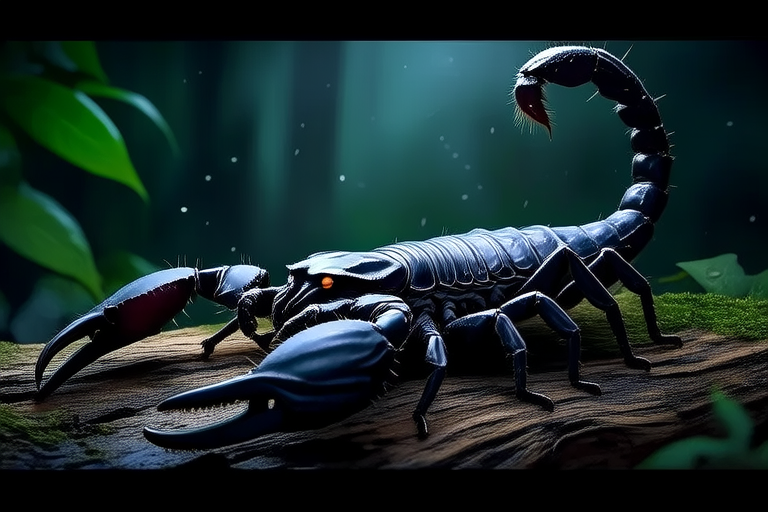
The Intriguing World of Heterometrus Spinifer: A Comprehensive Overview
Heterometrus spinifer, commonly known as the Indian forest scorpion or the Indian giant scorpion, is a fascinating arachnid that has captured the curiosity of many. This species, belonging to the family Scorpionidae, is native to parts of India, Bangladesh, and Nepal. With its distinct appearance and intriguing behaviors, it is no wonder that H. spinifer has garnered significant attention among scientists and nature enthusiasts alike.
Unique Characteristics
Heterometrus spinifer is characterized by its large size, typically reaching lengths of up to 18 centimeters. The species exhibits sexual dimorphism, with males being slightly larger than females. One of the most striking features of H. spinifer is its robust body structure and the presence of a distinctive spine located at the tip of its tail (telson). This spine is responsible for delivering venom during defensive or predatory actions. The venom of H. spinifer contains a cocktail of neurotoxins and other bioactive compounds, which are crucial for capturing prey and deterring potential threats.
Despite their intimidating appearance, these scorpions possess a delicate exoskeleton that requires careful handling. Their chitinous armor provides protection against environmental hazards and physical threats, but it also demands periodic molting to accommodate growth. During this process, the scorpion sheds its old exoskeleton, revealing a new, softer layer underneath. This new exoskeleton hardens over time, offering renewed protection.
Habitat and Behavior
Heterometrus spinifer thrives in tropical and subtropical regions, favoring humid environments such as dense forests, caves, and rocky outcrops. They are predominantly nocturnal creatures, emerging under the cover of darkness to hunt and avoid predators. Their preference for dark, secluded areas underscores their need for protection against sunlight, which can be detrimental to their sensitive eyesight and overall well-being.
These scorpions are adept at burrowing, creating intricate underground tunnels that serve as both shelters and ambush points for unsuspecting prey. The burrows are often lined with silk-like threads secreted by specialized glands, providing additional structural support and camouflage. This behavior not only aids in survival but also contributes to the maintenance of a stable microclimate within their habitats.
Communication among H. spinifer individuals is primarily achieved through chemical signals known as pheromones. These volatile compounds are released into the environment, allowing scorpions to detect the presence of potential mates, rivals, or threats. Additionally, tactile interactions play a role in social dynamics, particularly during courtship rituals and territorial disputes. While aggressive encounters are relatively rare, they can escalate quickly, leading to injuries or fatalities if not resolved promptly.
Dietary Habits
Heterometrus spinifer is an opportunistic predator, feeding on a wide range of small invertebrates, including insects, spiders, and even other scorpions. Their diet is influenced by availability and nutritional value, with a preference for high-protein sources that facilitate rapid growth and reproduction. Prey items are subdued through the injection of venom, which immobilizes the victim while facilitating consumption. Once the prey is incapacitated, the scorpion uses its powerful pincers to tear apart the body, exposing internal tissues for ingestion.
The hunting strategy employed by H. spinifer involves patience and precision. They lie in wait within their burrows or concealed locations, waiting for prey to venture close enough to strike. Upon detection, the scorpion rapidly extends its tail, delivering a potent dose of venom that ensures a swift demise. This method minimizes energy expenditure while maximizing efficiency in acquiring sustenance.
Myths and Misconceptions
One prevalent myth surrounding H. spinifer is the belief that all scorpions are inherently dangerous to humans. While it is true that their venom can pose a threat, the likelihood of encountering a life-threatening situation is exceedingly low. Most human interactions result in mild reactions, characterized by localized pain, swelling, and redness at the site of envenomation. Severe allergic responses are rare and usually confined to individuals with pre-existing sensitivities.
Another misconception is the notion that scorpions actively seek out humans to attack them. In reality, these creatures are largely indifferent to human presence, avoiding contact whenever possible. Encounters typically occur when people inadvertently disturb their habitats or enter areas where scorpions reside. It is important to exercise caution and respect for these animals’ natural territories to minimize the risk of accidental confrontations.
Scientific Insights and Expert Opinions
Recent studies have shed light on various aspects of H. spinifer biology, contributing valuable knowledge to our understanding of these remarkable creatures. Researchers have identified specific neurotoxins within the venom composition, elucidating their mechanisms of action and potential applications in medical research. For instance, certain peptides found in the venom exhibit promising properties for pain management and neurodegenerative disorders, warranting further investigation.
Experts emphasize the importance of preserving H. spinifer populations and their ecosystems, recognizing the ecological roles they play. As top predators within their respective food webs, these scorpions help regulate insect populations, promoting biodiversity and maintaining ecosystem balance. Conservation efforts focus on protecting critical habitats and raising awareness about the significance of these animals in sustaining healthy environments.
Conclusion
Heterometrus spinifer stands as a testament to nature’s ingenuity, showcasing a unique blend of physical adaptations and behavioral strategies that ensure survival in challenging conditions. By dispelling myths and embracing scientific discoveries, we gain a deeper appreciation for these captivating creatures and the vital contributions they make to the world around us.
