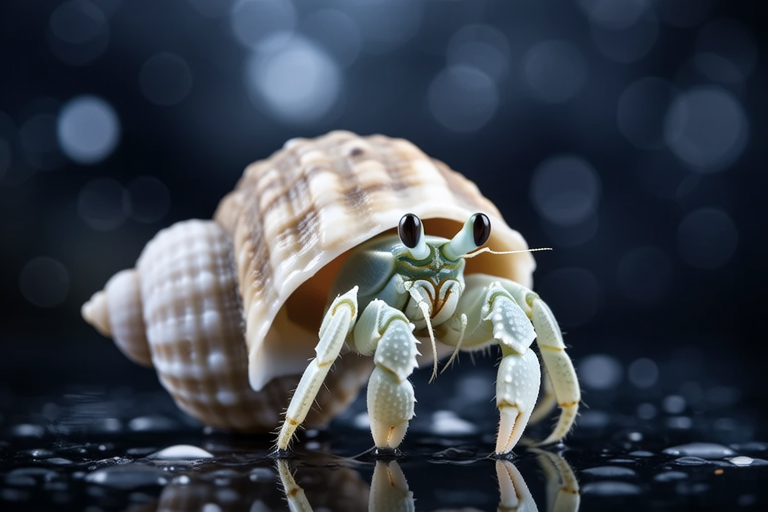
The Fascinating World of Pea Crabs: Tiny Titans of the Ocean
Pea crabs, despite their diminutive size, play a significant role in marine ecosystems. These crustaceans, belonging to the family Pinnotheridae, are among the smallest true crabs, typically ranging from 3 to 7 millimeters in length. Their name is derived from their resemblance to garden peas, both in shape and color. Their petite stature belies their fascinating ecological importance and complex behaviors.
Habitat and Distribution
Pea crabs are found in diverse aquatic environments across the globe, including shallow coastal waters, estuaries, and even deep-sea habitats. They are particularly abundant in regions where there are extensive populations of their hosts, which include mollusks such as oysters, mussels, and clams. The crabs’ ability to thrive in various water conditions is remarkable, from brackish estuarine areas to the high-salinity environments of open oceans.
Diet and Feeding Habits
Unlike many of their larger crab relatives, pea crabs are primarily filter feeders. They consume tiny particles of organic matter suspended in the water, including phytoplankton, zooplankton, and detritus. However, their feeding habits are not limited to these microscopic organisms. Pea crabs also benefit from the nutrients provided by their host’s diet, effectively ‘piggybacking’ on the food intake of their hosts. This dual approach to nutrition allows them to survive in environments where food may be scarce.
Symbiotic Relationships
The most striking feature of pea crabs is their symbiotic relationship with their hosts. These crabs are obligate commensals, meaning they cannot survive without their hosts. The host provides protection and a stable environment for the pea crabs, while the crabs offer no direct benefit to their hosts. In some cases, however, the presence of pea crabs can slightly increase the reproductive success of their hosts, indirectly benefiting them.
One of the most intriguing aspects of this relationship is how pea crabs manage to enter their hosts. Some species of pea crabs are born free-swimming larvae and must find a suitable host quickly or perish. Others, like Pinnixa fabulosa, have a unique strategy. The female crab lays her eggs near the gills of a potential host, and when the larvae hatch, they swim into the host’s body through the gill slits. Once inside, they molt several times before reaching adulthood. This process ensures that the young crabs are safely ensconced within their hosts before they are fully developed.
Reproduction and Life Cycle
The life cycle of pea crabs is highly adapted to their symbiotic lifestyle. Mating usually occurs within the host, and females lay their eggs in specially prepared egg sacs attached to the host’s internal structures. The eggs develop inside the host until the larvae hatch. The larvae then disperse into the surrounding water to search for new hosts, completing the cycle.
Recent studies have shed light on the complexities of pea crab reproduction. For instance, researchers have discovered that some species of pea crabs exhibit a phenomenon known as ‘cryptic sex determination.’ This means that the sex of the offspring is not determined by the usual genetic factors but rather by environmental conditions, such as temperature or food availability. This adaptation allows pea crabs to adjust their sex ratios in response to changing environmental pressures, ensuring the survival of the species.
Adaptations to the Environment
Pea crabs have evolved several adaptations to thrive in their challenging aquatic environments. Their small size allows them to fit snugly within the protective shells of their hosts, reducing their exposure to predators. Additionally, their flattened bodies enable them to maneuver easily within tight spaces, such as the mantle cavities of bivalves.
Pea crabs also possess specialized appendages that aid in their survival. For example, their chelipeds (claws) are modified for grasping onto the host’s internal structures, preventing them from being washed away by currents. Furthermore, their sensory organs are highly sensitive, allowing them to detect changes in their surroundings and respond accordingly.
Recent Scientific Discoveries
In recent years, scientists have made several groundbreaking discoveries about pea crabs. One of the most exciting findings is the identification of new species within the family Pinnotheridae. Advances in genetic sequencing techniques have enabled researchers to distinguish between closely related species based on subtle differences in their DNA. This has led to the description of several new species, expanding our understanding of the diversity within this group.
Another area of active research involves the impact of climate change on pea crab populations. As ocean temperatures rise and acidification increases, scientists are investigating how these environmental changes might affect pea crabs and their hosts. Early results suggest that rising temperatures could alter the timing of pea crab reproduction and larval development, potentially leading to mismatches between the availability of hosts and the emergence of larvae. Further studies are needed to fully understand the long-term consequences of these changes.
Interesting Facts About Pea Crabs
Pea crabs are not only fascinating from a biological perspective but also hold cultural significance in some parts of the world. In Japan, for example, it is considered good luck to find a pea crab inside an oyster. The discovery of a pea crab is seen as a sign of prosperity and is often celebrated during special occasions.
Interestingly, pea crabs have been observed engaging in a behavior known as ‘host switching.’ When a host becomes too crowded or stressed, pea crabs may leave their current host and seek out a new one. This behavior helps prevent overpopulation within a single host and ensures the survival of the entire population.
Despite their small size, pea crabs have been known to cause significant economic damage. In certain regions, the presence of pea crabs can reduce the commercial value of shellfish harvests. Fishermen and aquaculturists often take measures to control pea crab populations, such as using selective harvesting techniques or breeding host species that are less susceptible to pea crab infestation.
Conclusion
Pea crabs are truly remarkable creatures, embodying the resilience and adaptability of life in the ocean. From their intricate symbiotic relationships with hosts to their unique reproductive strategies, these tiny crustaceans have much to teach us about marine ecosystems. As we continue to explore the mysteries of the deep, it is clear that pea crabs will remain an important subject of study, offering valuable insights into the delicate balance of life beneath the waves.
