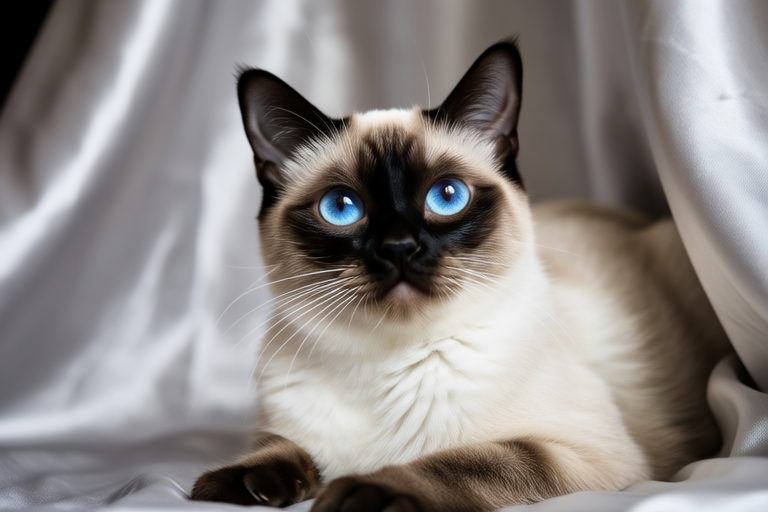
The Genetic Traits and Cultural Significance of Siamese Cats
The Siamese cat is one of the most recognizable and beloved breeds in the world, known for its striking blue eyes, slender build, and distinct coat pattern. This breed has a rich history, tracing back to the kingdom of Siam (now Thailand), where it was considered a sacred animal and a symbol of royalty. The unique genetic traits responsible for the Siamese cat’s appearance, particularly its blue eyes, have been the subject of fascination for centuries. In this article, we will explore the genetic basis of these traits, the cultural significance of the Siamese cat in ancient Thai society, and the breed’s journey from royal pets to household companions.
Historical Origins and Genetic Traits
The Siamese cat originated in Siam, now known as Thailand, and was first introduced to the Western world in the late 19th century. These cats were highly valued by the Siamese aristocracy and were often kept in temples and royal palaces. The distinctive features of the Siamese cat, including its blue eyes and dark points on an otherwise light-colored body, are the result of a genetic condition known as temperature-sensitive albinism. This condition is caused by a mutation in the Tyrosinase gene, which is responsible for producing the enzyme tyrosinase, essential for the production of melanin, the pigment responsible for skin, hair, and eye color.
In Siamese cats, the Tyrosinase gene mutation results in the enzyme being less active at higher temperatures. As a result, the areas of the cat’s body that are cooler, such as the face, ears, paws, and tail, produce more melanin and appear darker. Conversely, the warmer parts of the body, like the torso, remain lighter in color. This phenomenon is known as “partial albinism” or “temperature-dependent pigmentation.” The same genetic mutation also affects the development of the iris, causing it to appear blue due to the lack of melanin production in the eye tissue.
The temperature-sensitive albinism gene also contributes to another characteristic feature of Siamese cats: cross-eye dominance, also known as strabismus. This condition occurs because the temperature-sensitive albinism mutation affects the development of the optic nerve and muscles controlling eye movement. As a result, Siamese cats often have a slightly crossed appearance, giving them a unique and endearing look.
Cultural Significance in Ancient Thai Palaces
In ancient Siam, Siamese cats were highly revered and considered sacred animals. They were often kept in temples and royal palaces, where they were believed to possess mystical powers and serve as guardians of the household. According to legend, the Siamese cat was a gift from the gods, and its striking blue eyes were said to be able to see into the future. The cats were also thought to have the ability to communicate with spirits and protect their owners from harm.
The Siamese cat’s association with royalty and spirituality can be traced back to the ancient Thai belief in the concept of “Phra Rod,” or divine kingship. It was believed that the Siamese cat was a manifestation of the divine king, and as such, it was treated with great respect and care. The cats were often given names and were sometimes even buried alongside their human companions after death. In some cases, the Siamese cat was seen as a reincarnation of a deceased loved one, and its presence was believed to bring comfort and protection to the household.
The cultural significance of the Siamese cat extended beyond the royal courts and temples. In Thai folklore, there are numerous stories and legends about the origins of the breed. One popular tale tells of a Siamese queen who was so devoted to her husband that she would keep his rings warm between her paws while he was away. Over time, the rings left marks on the cat’s paws, which are still visible today in the form of dark patches on the paws of Siamese cats.
Myths and Legends
Another legend tells of a Siamese cat that saved a baby prince from a fire by wrapping its tail around the child and pulling him to safety. In gratitude, the king decreed that all Siamese cats should wear gold collars, a tradition that continues to this day. These stories reflect the deep reverence and affection that the Thai people have for the Siamese cat, and they continue to be passed down through generations.
Siamese cats were also believed to have the ability to communicate with the gods and spirits. In some stories, the cats are depicted as messengers between the human and spirit worlds, bringing important messages and warnings to their human companions. These myths and legends helped to cement the Siamese cat’s place in Thai culture as a sacred and mystical creature, worthy of respect and admiration.
Modern Perceptions and Worldwide Popularity
Today, the Siamese cat is one of the most popular breeds in the world, prized for its striking appearance and friendly personality. However, the breed’s modern perception is quite different from its historical depiction in Thailand. While the Siamese cat was once considered a sacred animal, reserved for the elite and the spiritual, it is now a common household pet, enjoyed by people from all walks of life.
The breed’s popularity can be attributed to several factors, including its distinctive appearance, playful personality, and vocal nature. Siamese cats are known for their intelligence and curiosity, and they often form strong bonds with their human companions. They are also highly social animals, and many owners find them to be excellent conversationalists, often engaging in “meowversations” with their owners.
The Siamese cat’s journey from royal pet to household companion reflects the changing attitudes towards pets in general. In the past, animals were often seen as tools or symbols of status, but today, they are increasingly viewed as members of the family. This shift in perception has contributed to the growing popularity of the Siamese cat, as more and more people seek out pets that are not only beautiful but also intelligent and affectionate.
Recent Scientific Discoveries
In recent years, scientists have made significant progress in understanding the genetic basis of the Siamese cat’s unique traits. A study published in 2014 identified the specific mutation in the Tyrosinase gene responsible for temperature-sensitive albinism. This discovery has shed new light on the evolution of the Siamese cat and its relationship to other feline species.
Further research has also explored the potential health implications of the temperature-sensitive albinism mutation. While the mutation is responsible for the Siamese cat’s distinctive appearance, it may also increase the risk of certain health conditions, including deafness and vision problems. Scientists are continuing to investigate these issues in order to develop better treatments and preventative measures for affected cats.
Another area of interest for researchers is the role of the Siamese cat in the broader context of feline genetics. By studying the genetic makeup of the Siamese cat, scientists hope to gain insights into the evolution of other feline species and the development of new breeds. This work could have important implications for both veterinary medicine and conservation efforts.
Conclusion
The Siamese cat is a remarkable breed, both in terms of its appearance and its cultural significance. Its striking blue eyes and dark points are the result of a unique genetic trait, and its long history in Thailand reflects the deep respect and admiration that the Thai people have for this special animal. From its origins in the royal palaces of Siam to its current status as a beloved household pet, the Siamese cat has captured the hearts of people around the world. As scientists continue to uncover the mysteries of the Siamese cat’s genetics, we can expect to learn even more about this fascinating breed and its place in the world.
