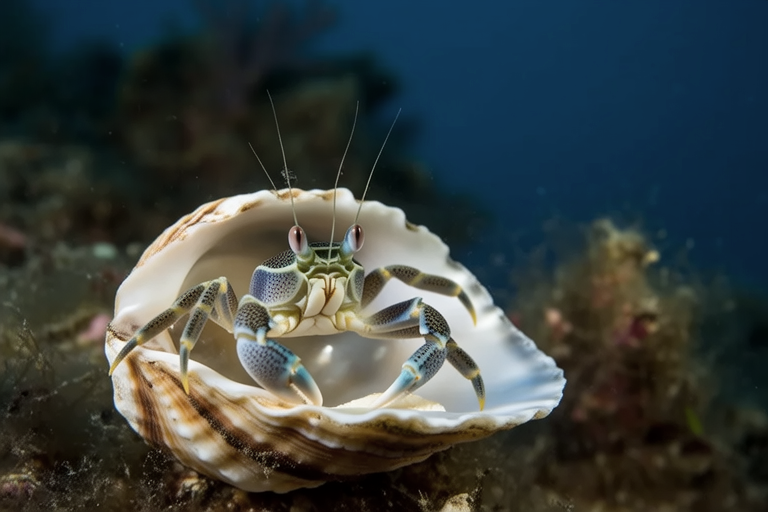
The Enigmatic Life Cycle, Adaptations, and Ecological Role of Pea Crabs
Welcome to the captivating world of pea crabs, a group of crustaceans that have mastered the art of living in harmony with bivalves. These tiny crustaceans, despite their diminutive size, play a significant role in marine ecosystems. Let’s dive into their fascinating life cycle, unique adaptations, and the intricate symbiotic relationships they share with bivalves.
The Life Cycle of Pea Crabs
Pea crabs undergo a complex life cycle that begins with the hatching of eggs from female pea crabs. The larvae, known as zoeae, drift in the ocean currents for several weeks before metamorphosing into megalopae. This stage is characterized by the presence of long appendages used for swimming. Eventually, the megalopae find a suitable host, typically a bivalve, where they undergo further development into adult pea crabs. The entire process is a testament to their adaptability and resilience in the vast and often unforgiving ocean.
Unique Adaptations
Pea crabs have evolved remarkable adaptations to thrive within their bivalve hosts. Their flattened bodies allow them to maneuver effortlessly between the bivalve’s gills and mantle cavity. Additionally, their reduced legs facilitate easy movement through narrow spaces. These adaptations enable pea crabs to exploit the resources available within their hosts, including food particles and protection from predators. Moreover, their small size ensures they do not compete directly with their hosts for space or food.
Symbiotic Relationships
The relationship between pea crabs and bivalves is a classic example of commensalism, where one organism benefits without affecting the other. For pea crabs, this arrangement provides shelter, a steady supply of nutrients, and protection from predators. In return, bivalves receive assistance in cleaning their gills and improving water flow. This mutualistic interaction underscores the importance of biodiversity in maintaining healthy marine ecosystems.
Diverse Species and Geographical Distribution
With over 100 species worldwide, pea crabs exhibit remarkable diversity. They can be found in various habitats, from shallow coastal waters to deep-sea environments. Some species prefer specific bivalve hosts, while others are more generalist. Notable genera include Pinnotheres, which is widely distributed across temperate regions, and Paramithrax, primarily found in colder waters. The geographical distribution of pea crabs reflects their ability to adapt to different environmental conditions.
Challenges in Their Habitats
Despite their adaptability, pea crabs face numerous challenges in their habitats. Climate change, pollution, and overfishing threaten the health of marine ecosystems and the survival of both pea crabs and their bivalve hosts. Changes in water temperature and chemistry can disrupt the delicate balance of these symbiotic relationships, leading to population declines. Conservation efforts are essential to protect these unique creatures and the ecosystems they inhabit.
Key Scientific Discoveries
Scientific research has shed light on various aspects of pea crab biology and ecology. Studies have revealed the genetic diversity within pea crab populations and the factors influencing their distribution. Advances in molecular techniques have allowed researchers to trace the evolutionary history of pea crabs and uncover the origins of their symbiotic relationships with bivalves. These discoveries contribute to our understanding of marine biodiversity and inform conservation strategies.
Conservation Efforts
Efforts to conserve pea crabs and their habitats are underway. Marine protected areas provide safe havens for these organisms and their bivalve hosts, reducing the impact of human activities. Sustainable fishing practices help maintain healthy populations of both pea crabs and their hosts. Public awareness campaigns educate communities about the importance of protecting marine biodiversity and encourage responsible behavior. Collaborative initiatives involving scientists, policymakers, and local communities are vital for the success of these conservation efforts.
Conclusion
The life cycle, adaptations, and ecological role of pea crabs highlight the complexity and beauty of marine ecosystems. Their symbiotic relationships with bivalves exemplify the intricate web of interactions that sustain life in the oceans. As we continue to explore and understand these fascinating creatures, it is crucial to protect them and the environments they call home. By doing so, we ensure the preservation of marine biodiversity for future generations.
