The Unique Behavior Patterns of Heterometrus Spinifer: A Deep Dive into Their Habits
Heterometrus spinifer, commonly known as the Asian forest scorpion, is a fascinating arachnid species native to Southeast Asia. This intriguing creature is part of the Heterometrus genus, which comprises several species renowned for their distinctive physical attributes and behaviors. The Heterometrus spinifer stands out due to its robust appearance and unique physical features that play a crucial role in its daily activities and survival strategies.
Distinct Physical Features
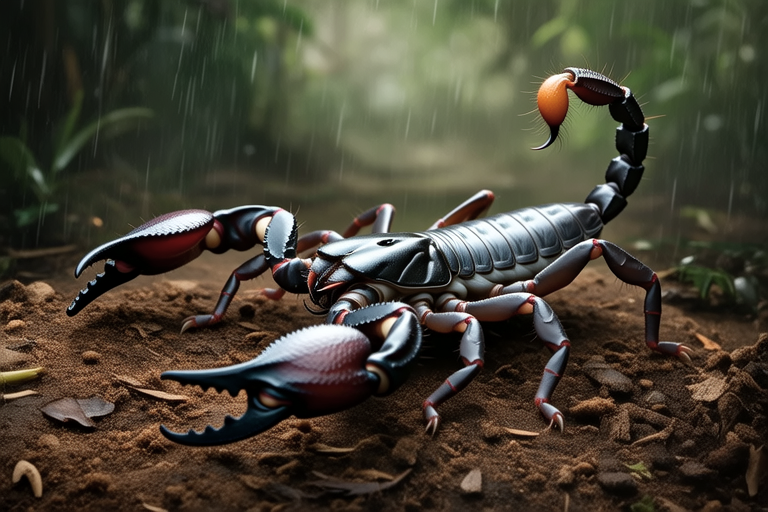
The Heterometrus spinifer possesses a set of remarkable physical traits that are essential for its survival. It boasts a large, flattened body, typically measuring around 8-12 centimeters in length, with a broad, triangular-shaped head. Its most striking feature is the presence of a pair of long, curved pedipalps, which serve as both sensory organs and formidable weapons. These appendages are equipped with sharp pincers that the scorpion uses for capturing prey and defending itself against potential threats. Additionally, the tail, or metasoma, is elongated and ends in a venomous stinger. The overall coloration of the Heterometrus spinifer ranges from dark brown to black, providing excellent camouflage in its natural habitat.
Natural Habitat and Daily Routines
The Heterometrus spinifer thrives in the dense, humid forests of Southeast Asia, particularly in regions like Malaysia, Thailand, and Indonesia. This species prefers environments characterized by high humidity and temperatures, often residing under logs, within crevices of rocks, or among leaf litter on the forest floor. The lush vegetation and abundant moisture of these areas provide ideal conditions for the scorpion’s nocturnal lifestyle. During the day, they remain hidden, conserving energy and avoiding predators, while venturing out at night to forage for food and engage in other activities.
Their habitat significantly influences their daily routines. The scorpions are primarily active during the cooler, darker hours of the evening and early morning, when temperatures are more favorable for their metabolism. They spend their days in secluded spots, often burrowing slightly into the soil to maintain their body temperature and avoid dehydration. This nocturnal behavior also helps them evade many daytime predators, such as birds and larger mammals.
Feeding Habits
The diet of the Heterometrus spinifer consists mainly of insects and other small invertebrates, though it can occasionally consume vertebrates if the opportunity arises. Prey items include crickets, grasshoppers, beetles, spiders, and even small frogs. The scorpion’s hunting strategy is highly efficient, relying on its keen senses and stealthy approach. With its sensitive pedipalps and numerous sensory hairs, it can detect the slightest vibrations or movements of potential prey.
When hunting, the Heterometrus spinifer remains motionless, patiently waiting for prey to come within reach. Once an insect ventures too close, the scorpion strikes rapidly, using its powerful pincers to grasp and immobilize the victim. If necessary, it will then inject venom through its stinger to subdue larger or more resistant prey. The venom serves multiple purposes: it paralyzes the prey, aids in digestion, and ensures the safety of the scorpion during the hunt.
Social Behaviors and Communication
Despite being generally solitary creatures, Heterometrus spinifer individuals do interact within their environment, especially during mating season. Males are known to engage in elaborate courtship dances to attract females, involving intricate movements and displays of their pedipalps. However, these interactions are brief and primarily focused on reproduction.
Communication between individuals is limited but exists. Scorpions can detect chemical signals left by other members of their species through specialized sensory structures on their bodies. These pheromones convey information about sex, reproductive status, and sometimes even the presence of danger. While direct visual or auditory communication is not observed, the subtle exchange of chemical cues plays a vital role in maintaining social order and facilitating mating opportunities.
Defense Mechanisms
The Heterometrus spinifer has evolved several effective defense mechanisms to protect itself from predators and threats. Its primary defense is the potent venom it delivers through its stinger, which contains neurotoxins capable of paralyzing or killing smaller animals. While the venom is not lethal to humans, it can cause severe pain, swelling, and allergic reactions in some cases.
In addition to venom, the scorpion employs a variety of defensive postures and behaviors. When threatened, it may raise its tail and flex it menacingly, displaying the stinger to deter potential attackers. Another tactic involves curling up into a tight ball, protecting its vulnerable underside and presenting a spiny exterior to the threat. In extreme situations, the Heterometrus spinifer might also release a foul-smelling secretion from glands near its anus, further discouraging predators.
Lifecycle Stages and Recent Research
The lifecycle of the Heterometrus spinifer begins with the birth of live young, a process known as viviparity. After a gestation period lasting several months, female scorpions give birth to anywhere from 20 to 40 offspring, which are born fully formed but still soft and pale. These young scorpions remain attached to their mother’s back for the first few days, receiving protection and warmth until their exoskeletons harden.
As they grow, the juveniles undergo a series of molts, shedding their exoskeletons to accommodate their increasing size. This process, known as ecdysis, occurs approximately once every month for the first year of life and gradually slows down as the scorpions mature. Sexual maturity is reached after about two years, at which point males begin searching for mates, and females prepare to bear new generations.
Recent research has shed light on various aspects of the Heterometrus spinifer‘s biology and behavior. Scientists have been studying the composition of their venom, aiming to understand its potential medical applications. Additionally, there is ongoing work on understanding the ecological roles these scorpions play in their habitats and the impact of human activities on their populations. Conservation efforts are also underway, focusing on preserving the natural ecosystems where these fascinating creatures reside.
In conclusion, the Heterometrus spinifer is a truly remarkable species, showcasing a wide array of unique behaviors and adaptations that have allowed it to thrive in its specific ecological niche. From its nocturnal hunting habits to its sophisticated defense mechanisms, each aspect of its biology contributes to its survival and success. As we continue to explore and learn more about this species, it becomes increasingly clear that the Heterometrus spinifer holds valuable lessons for both science and conservation.
