Unique Abilities and Lesser-Known Skills of Norway’s Beloved Pets
Norway is renowned for its stunning landscapes and rich cultural heritage. Among the many treasures this country holds are its iconic pets, which have played significant roles in shaping Norwegian traditions and folklore. This article delves into the unique abilities and lesser-known skills of some of Norway’s most cherished animal companions, focusing on specific breeds and types of animals that are particularly significant in Norwegian culture.
The Norwegian Elkhound: A Symbol of Strength and Intelligence
The Norwegian Elkhound, also known as the Norsk Elghund, is one of the most iconic dog breeds in Norway. Originally bred to assist hunters in tracking and hunting large game such as moose, the Elkhound has developed exceptional intelligence and agility over centuries. These dogs possess an innate ability to read their surroundings, allowing them to anticipate the movements of prey with remarkable accuracy.
Historically, the Elkhound’s intelligence was crucial during hunts, as they had to work closely with human hunters. Their ability to communicate effectively with their handlers through subtle body language and vocalizations was essential for successful hunting expeditions. The Elkhound’s intelligence extends beyond hunting; they are highly trainable and can learn complex commands quickly, making them excellent companions for various activities.
In addition to their cognitive abilities, Norwegian Elkhounds are surprisingly agile for their size. They can navigate rugged terrain with ease, thanks to their sturdy build and strong legs. This agility has been honed over generations of working in the harsh Norwegian wilderness, where quick reflexes and nimble movements could mean the difference between life and death.
The Buhund: A Versatile Companion with Unique Communication Skills
The Buhund, another popular breed in Norway, is known for its versatility and unique communication skills. There are two main types of Buhunds: the Norwegian Buhund and the Swedish Vallhund. Both breeds share similar characteristics but have distinct histories. The Norwegian Buhund, in particular, has played a significant role in Norwegian agriculture and herding practices.
Buhunds are highly intelligent and possess an impressive range of vocalizations, which they use to communicate with their handlers and other animals. This skill has been invaluable in herding livestock, as it allows the dogs to direct animals without physical contact. The Buhund’s ability to convey information through barking patterns and body language has made them indispensable in Norwegian farming communities.
Historically, Buhunds were used to herd sheep and cattle, and their communication skills were crucial for maintaining order within the herds. Over time, these dogs have become more than just working animals; they are now beloved family pets known for their loyalty and affectionate nature. Despite their small size, Buhunds retain their herding instincts and can be trained to perform a variety of tasks, from agility competitions to search and rescue missions.
The Lofoten Cat: An Agile Climber and Fisherman’s Helper
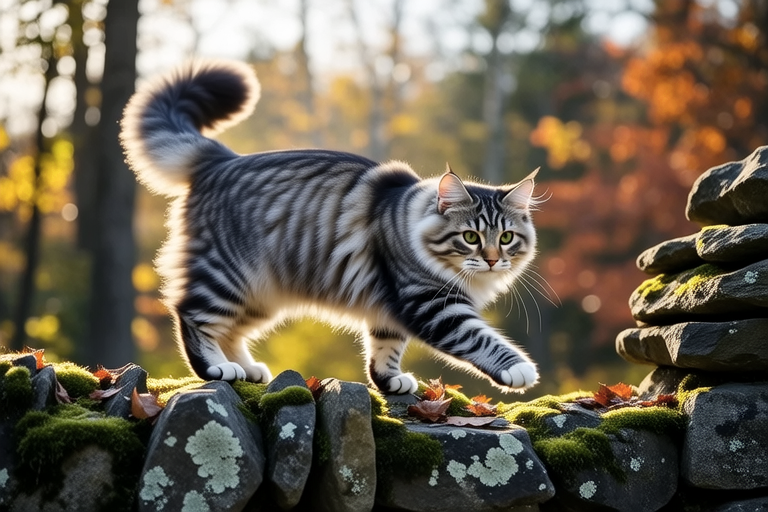
The Lofoten Cat, also known as the Norwegian Forest Cat, is a breed native to Norway that has adapted perfectly to the country’s challenging environment. These cats are known for their exceptional climbing abilities and their role in assisting fishermen. The Lofoten Cats’ agility and intelligence make them ideal companions for sailors and fishermen, who often rely on them to catch fish and keep rodent populations under control.
The Lofoten Cat’s agility is perhaps its most notable trait. With strong hind legs and sharp claws, these felines can scale trees and cliffs with ease, even in harsh weather conditions. Their ability to climb has been crucial for survival in the rugged Norwegian landscape, where food sources can be scarce. In addition to their climbing prowess, Lofoten Cats are adept at catching fish, a skill that has been particularly useful for fishermen.
Historically, these cats were valued for their ability to help fishermen by catching fish that escaped the nets. Their agility and intelligence allowed them to adapt to the unpredictable sea, making them reliable companions for those who depended on the ocean for their livelihood. Today, while their role as fishermen’s helpers may have diminished, Lofoten Cats remain beloved pets known for their playful and affectionate nature.
The Hardanger Goat: A Symbol of Resilience and Cultural Significance
The Hardanger Goat, named after the Hardanger region in southwestern Norway, is a breed that has played a significant role in Norwegian history and culture. These goats are known for their resilience and adaptability, traits that have allowed them to thrive in the challenging mountainous regions of Norway. The Hardanger Goat’s unique abilities extend beyond mere survival; they have also contributed to traditional Norwegian practices, such as cheese-making and textile production.
Hardanger Goats are highly intelligent and possess an innate ability to find food and shelter in difficult environments. This intelligence has been crucial for their survival in the harsh Norwegian climate, where finding suitable grazing areas can be a challenge. In addition to their problem-solving skills, these goats are surprisingly agile for their size, capable of navigating steep terrain with ease. Their agility has been particularly useful for farmers who need to move their herds to new pastures.
Historically, Hardanger Goats have been integral to Norwegian cheese-making and textile production. Their milk is used to produce a variety of cheeses, including Jarlsberg and Gammelost, while their wool has been woven into traditional Norwegian textiles. The goats’ role in these industries has helped preserve Norwegian cultural heritage, ensuring that traditional practices continue to be passed down through generations.
The Puffin: A Unique Communicator and Indicator of Environmental Health
While not typically considered a pet, puffins hold a special place in Norwegian culture due to their unique communication skills and their importance as indicators of environmental health. These colorful seabirds are known for their distinctive calls and behaviors, which have been studied extensively by researchers seeking to understand their role in marine ecosystems.
Puffins are highly social birds that use a variety of vocalizations and body language to communicate with one another. Their ability to convey information about food sources and potential threats has been crucial for their survival in the wild. In addition to their communication skills, puffins are skilled divers and swimmers, capable of catching fish with remarkable precision. Their agility in the water has made them efficient hunters, ensuring that they can provide for themselves and their young.
Historically, puffins have been important indicators of environmental health in Norwegian waters. Changes in their population or behavior can signal shifts in marine ecosystems, prompting conservation efforts to protect vulnerable species. By studying puffins, researchers can gain valuable insights into the health of the oceans and the impact of human activities on marine life.
The Conclusion
From the intelligent and agile Norwegian Elkhound to the versatile and communicative Buhund, and from the agile Lofoten Cat to the resilient Hardanger Goat, Norway’s beloved pets possess a wide array of unique abilities and lesser-known skills. These animals have played significant roles in shaping Norwegian traditions and practices, from hunting and herding to cheese-making and textile production. By exploring the hidden talents of these iconic pets, we gain a deeper appreciation for the rich cultural heritage of Norway and the important contributions these animals have made to the country’s history and identity.
