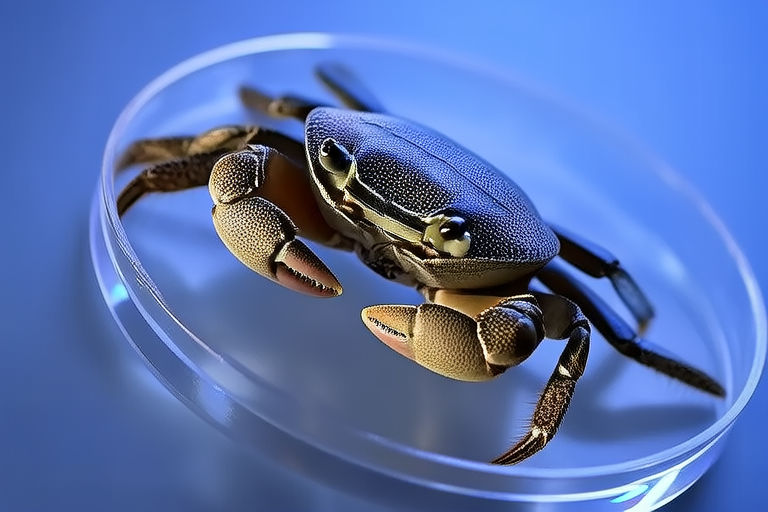
Microscopic Marvels: Unveiling the Secrets of Pea Crabs
In the vast and intricate world of marine life, there exists a group of creatures that are often overlooked but play a crucial role in the balance of marine ecosystems. These tiny inhabitants are known as pea crabs, a fascinating family of crustaceans that have captivated scientists with their unique characteristics, complex lifecycles, and symbiotic relationships. This article delves into the microscopic marvels of pea crabs, exploring their habitat, lifecycle, and the vital roles they play within their ecosystems.
Introduction to Pea Crabs
Pea crabs, belonging to the family Pinnotheridae, are small, soft-bodied crabs that typically inhabit the mantle cavities of bivalve mollusks such as oysters, mussels, and clams. Their name derives from their diminutive size, which often makes them resemble a pea. Despite their small stature, these crabs are incredibly adaptable and have evolved to thrive in a wide range of aquatic environments, from shallow coastal waters to deep-sea habitats.
Unique Characteristics
One of the most striking features of pea crabs is their extraordinary adaptability. Unlike many other crab species, pea crabs lack a hard exoskeleton, instead possessing a softer, more flexible body. This adaptation allows them to fit snugly within the protective shells of their host bivalves, where they are shielded from predators and harsh environmental conditions. Their bodies are usually transparent or semi-transparent, making them difficult to spot even for trained eyes.
Pea crabs also exhibit a remarkable ability to change color to match the internal environment of their hosts. This camouflage helps them avoid detection by both predators and competitors. Their coloration can vary from pale white to dark brown, depending on the species and the type of bivalve they inhabit.
Habitat and Distribution
Pea crabs are found in various aquatic environments across the globe, including coastal areas, estuaries, and even deep-sea regions. They are particularly abundant in areas where bivalves are prevalent, such as oyster beds and mussel reefs. The specific habitats they choose depend largely on the availability of suitable hosts and the environmental conditions that support both the crabs and their hosts.
The distribution of pea crabs is influenced by factors such as water temperature, salinity, and food availability. They are generally found in temperate and tropical waters, although some species have adapted to colder climates as well. In recent years, studies have shown that climate change and ocean acidification may impact the distribution and survival of pea crabs, highlighting the importance of understanding their ecological needs.
Lifecycle and Reproduction
The lifecycle of pea crabs is closely tied to their hosts, and it begins with the larval stage. After hatching from eggs attached to the female’s abdomen, the larvae enter the water column and drift freely until they find a suitable host. Once inside the host, the larvae undergo metamorphosis, transforming into juvenile crabs that are better adapted to life within the bivalve’s shell.
The juveniles grow rapidly, molting several times before reaching adulthood. During this period, they continue to benefit from the protection and resources provided by their host. Adult pea crabs typically live for one to two years, during which time they reproduce and lay eggs. Female pea crabs carry their eggs under their abdomens, ensuring they remain safe until they hatch.
Interestingly, pea crabs have a unique reproductive strategy. Males and females mate inside the host bivalve, and the females then carry the fertilized eggs until they hatch. This internal breeding process ensures that the next generation of pea crabs is already protected within a suitable environment.
Symbiotic Relationships
The relationship between pea crabs and their host bivalves is a classic example of mutualism, a type of symbiosis where both organisms benefit from the association. For the pea crabs, the bivalves provide shelter, protection, and a constant supply of nutrients. In return, the crabs contribute to the health of their hosts by feeding on parasites and detritus that could otherwise harm the bivalves.
This mutually beneficial arrangement has evolved over millions of years, resulting in highly specialized adaptations on both sides. The bivalves have developed thicker shells and more robust muscles to accommodate the crabs, while the crabs have evolved to be smaller and more streamlined to fit comfortably within the limited space. Additionally, some species of pea crabs have developed specialized mouthparts that allow them to filter food particles directly from the water, further enhancing their role in maintaining the health of their hosts.
Role in Marine Ecosystems
Pea crabs play a vital role in marine ecosystems by contributing to the overall health and stability of their environments. As part of the bivalve community, they help maintain the balance of populations by controlling the growth of harmful parasites and detritus. Their presence also influences the behavior and physiology of their hosts, potentially affecting the broader ecosystem in subtle yet significant ways.
Moreover, pea crabs serve as an important food source for larger marine animals, including fish, birds, and other crustaceans. This makes them an integral part of the food web, connecting different levels of the ecosystem. By studying pea crabs and their interactions with their hosts, scientists can gain valuable insights into the functioning of marine ecosystems and the potential impacts of environmental changes.
Recent Discoveries and Studies
Advances in technology and research methods have allowed scientists to uncover new details about pea crabs and their behaviors. Recent studies have revealed that certain species of pea crabs can detect chemical signals emitted by their hosts, enabling them to locate suitable partners for mating. This discovery highlights the complexity of their communication and reproductive strategies.
Additionally, researchers have used DNA analysis to identify new species of pea crabs and to better understand their evolutionary history. These findings contribute to our knowledge of biodiversity and help conservation efforts aimed at protecting marine ecosystems.
Another area of interest is the impact of human activities, such as fishing and pollution, on pea crab populations. Ongoing research aims to assess how these factors affect the abundance and distribution of pea crabs and to develop strategies for mitigating negative effects.
Conclusion
Pea crabs are truly microscopic marvels, showcasing the incredible diversity and complexity of marine life. Their unique characteristics, intricate lifecycles, and symbiotic relationships make them a fascinating subject of study. By understanding these tiny creatures and their roles in marine ecosystems, we can gain valuable insights into the delicate balance of nature and work towards preserving the health of our oceans.
