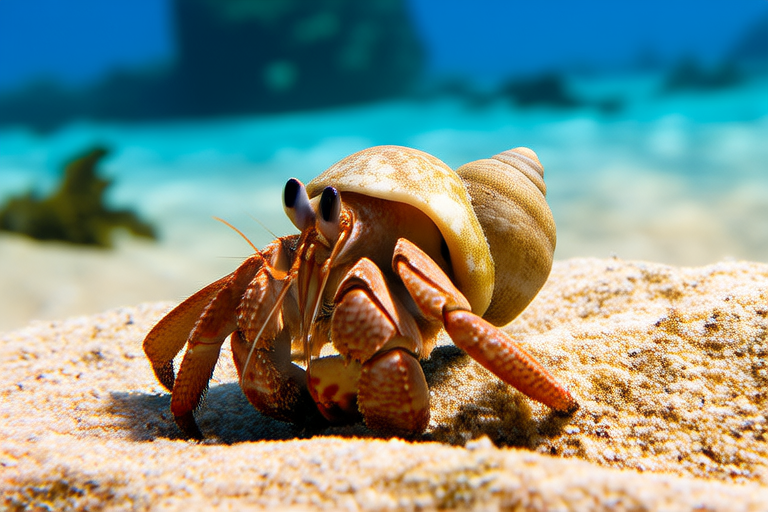
5 Surprising Facts About Hermit Crabs You Never Knew
Hermit crabs are fascinating creatures that have captured the imagination of many people around the world. These small crustaceans are often found in tropical and subtropical environments, and they have a unique lifestyle that sets them apart from other crabs. While most people know that hermit crabs live inside discarded shells, there are many other aspects of their lives that remain unknown to the general public. In this article, we will explore five surprising facts about hermit crabs that you may never have heard before.
Fact 1: Hermit Crabs Can’t Make Their Own Shells
The first surprising fact about hermit crabs is that they cannot produce their own shells. Unlike snails, which can secrete calcium carbonate to build their protective casings, hermit crabs rely on empty mollusk shells for shelter. This dependence on external shells is what gives hermit crabs their name, as they are essentially hermits, living alone in borrowed homes. The shells provide protection from predators and environmental hazards, but they must be regularly replaced as the hermit crab grows larger. This fact is surprising because it highlights the unique relationship between hermit crabs and the marine environment. It also emphasizes the importance of maintaining healthy ecosystems, where there are plenty of empty shells available for hermit crabs to inhabit.
When a hermit crab outgrows its current shell, it must find a new one. This process is called “moulting,” and it involves shedding its exoskeleton and growing a new one. During this time, the hermit crab is particularly vulnerable, as its soft body is exposed and unprotected. To protect themselves during this period, some species of hermit crabs will carry their old shell with them until they find a suitable replacement. This behavior is known as “shell swapping,” and it allows hermit crabs to maintain their protection even when they are at their most vulnerable.
Fact 2: Hermit Crabs Are Social Creatures
The second surprising fact about hermit crabs is that they are social animals. Contrary to popular belief, hermit crabs are not solitary creatures but rather enjoy the company of others. In the wild, hermit crabs often gather in large groups, sometimes numbering in the thousands. These gatherings are not just random; they serve important purposes such as finding mates, exchanging shells, and protecting themselves from predators. When hermit crabs come together, they form complex societies with specific roles and hierarchies. Some individuals act as sentinels, keeping watch for potential threats, while others focus on foraging for food.
One of the most remarkable aspects of hermit crab social behavior is their ability to cooperate when it comes to finding new shells. As mentioned earlier, hermit crabs need to replace their shells as they grow, and this can be a challenging task. However, when multiple hermit crabs are present, they can work together to find and evaluate potential new homes. They may even engage in a sort of “shell relay race,” where each crab tries on a new shell and passes it along to the next individual if it doesn’t fit. This cooperative behavior is surprising because it challenges the common perception of hermit crabs as solitary creatures. It also demonstrates the importance of community and cooperation in the animal kingdom.
Fact 3: Hermit Crabs Have Been Around For Over 165 Million Years
The third surprising fact about hermit crabs is their longevity. These creatures have been around for over 165 million years, making them one of the oldest living species on Earth. Fossil records show that hermit crabs were already present during the Jurassic period, when dinosaurs roamed the planet. This long history is surprising because it shows how adaptable and resilient these animals are. Despite significant changes in the Earth’s climate and environment, hermit crabs have managed to survive and thrive for millions of years.
Hermit crabs have evolved to live in a variety of habitats, including coral reefs, mangrove forests, and sandy beaches. Their ability to adapt to different environments has played a crucial role in their survival. One of the key adaptations that has allowed hermit crabs to persist for so long is their flexible diet. Hermit crabs are omnivores, meaning they eat both plant and animal matter. This diverse diet gives them access to a wide range of food sources, which helps them survive in changing conditions. Additionally, hermit crabs have developed strong claws and legs, which allow them to move quickly and efficiently through their environment. These physical attributes have helped them avoid predators and secure resources necessary for survival.
Fact 4: Hermit Crabs Can Communicate Through Vibrations
The fourth surprising fact about hermit crabs is their ability to communicate through vibrations. Hermit crabs are known to produce and detect low-frequency vibrations in their environment, which they use to send messages to other members of their species. This form of communication is particularly useful for coordinating activities within their social groups. For example, hermit crabs may use vibrations to signal the presence of food or warn others of potential dangers. They can also use vibrations to establish dominance within their group, which helps maintain order and reduce conflict.
The ability of hermit crabs to communicate through vibrations is surprising because it reveals a sophisticated level of social interaction. It suggests that these creatures are more intelligent than previously thought and that they have developed complex ways of interacting with each other. Scientists have been able to study this phenomenon by placing hermit crabs on a smooth surface and observing their reactions to various stimuli. They have found that hermit crabs can detect subtle changes in vibration patterns and respond accordingly. This research has opened up new avenues for understanding the behavior and social dynamics of hermit crabs, as well as other crustaceans.
Fact 5: Hermit Crabs Can Live Up to 40 Years
The fifth surprising fact about hermit crabs is their impressive lifespan. Under optimal conditions, hermit crabs can live up to 40 years, which is significantly longer than many other crustacean species. This long lifespan is surprising because it underscores the resilience and adaptability of these creatures. Hermit crabs have developed several strategies to extend their life expectancy, including a slow growth rate and a high degree of self-preservation.
One of the key factors contributing to the long lifespan of hermit crabs is their ability to conserve energy. Unlike many other animals, hermit crabs do not expend large amounts of energy on rapid growth or reproduction. Instead, they focus on maintaining their health and avoiding unnecessary risks. This conservative approach to life allows hermit crabs to live longer and healthier lives. Another factor that contributes to their longevity is their ability to regenerate lost limbs. If a hermit crab loses a claw or leg, it can regrow it over time. This regenerative capability helps hermit crabs recover from injuries and continue living for many years.
In conclusion, hermit crabs are much more complex and fascinating than many people realize. From their inability to make their own shells to their long lifespan and sophisticated communication methods, these creatures have many surprising traits that make them stand out in the animal kingdom. By learning more about hermit crabs, we can gain a deeper appreciation for the diversity of life on Earth and the intricate relationships between different species. Whether you’re a seasoned biologist or simply curious about the natural world, there’s always something new to discover about these amazing creatures.
