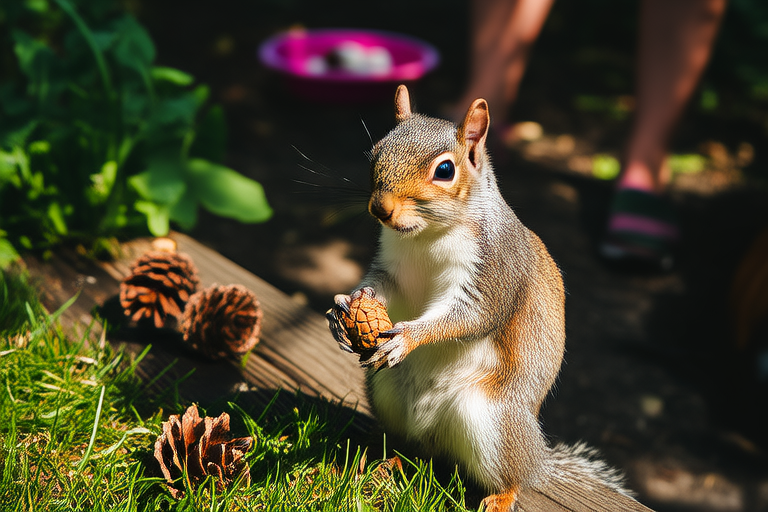
The Epic Battle for Backyard Supremacy: How Squirrels Outsmart Us
Backyards across the globe have become battlegrounds of sorts, where the seemingly innocent skirmishes between homeowners and squirrels play out daily. These small, agile rodents are more than just cute nuisances; they are strategic, adaptable, and surprisingly intelligent creatures that often come out on top. This article delves into the epic battle for backyard supremacy, exploring the clever tactics squirrels employ to dominate these spaces, overcoming obstacles set by humans. We’ll also compare their strategies against common human defenses like fences, feeders, and scare tactics, providing a lighthearted yet educational look at these persistent creatures.
Squirrel Behavior and Adaptability
Understanding why squirrels are so successful in their backyard conquests requires insight into their behavior and adaptability. Squirrels are members of the rodent family, known for their sharp teeth and bushy tails. They are highly adaptable and can thrive in various environments, from forests to urban areas. Their adaptability is a key factor in their success, as they can quickly adjust to changes in their surroundings and find new ways to access resources.
One of the most fascinating aspects of squirrel behavior is their problem-solving ability. Studies have shown that squirrels can remember the location of thousands of hidden caches of food, using spatial memory and landmarks to retrieve them accurately. This impressive cognitive ability allows them to outsmart many of the defenses humans set up in their backyards.
Clever Tactics Employed by Squirrels
Squirrels have developed a variety of tactics to gain access to resources in backyards, often bypassing or adapting to human-made barriers. One of the most common tactics is their ability to climb. Squirrels are excellent climbers, capable of scaling trees, fences, and even houses. Their strong claws and flexible bodies allow them to navigate vertical surfaces with ease, making it difficult for homeowners to keep them out.
Another tactic employed by squirrels is their ability to dig. If they cannot climb over a fence, they will often dig under it. Squirrels are adept at creating underground tunnels, which they can use to access areas that are otherwise off-limits. This digging behavior can be particularly frustrating for homeowners who have spent time and money installing fences to keep squirrels out.
Squirrels also demonstrate remarkable persistence when it comes to accessing bird feeders. Many homeowners install bird feeders in their backyards, thinking that squirrels won’t be able to reach them. However, squirrels have found numerous ways to get around these feeders. Some squirrels have been observed jumping from tree branches onto feeder poles, while others have learned to knock the feeders down or chew through the protective cages designed to keep them out. In some cases, squirrels have even been seen dismantling feeders piece by piece, taking advantage of any weakness in the design.
Scientific Insights into Squirrel Problem-Solving Abilities
Recent studies have shed light on the sophisticated problem-solving abilities of squirrels. Researchers have conducted experiments to test the limits of squirrel intelligence, revealing that these animals are capable of complex reasoning and planning. For example, one study showed that squirrels can delay gratification, waiting for a better opportunity to obtain food rather than settling for an immediate but less desirable option. This ability to plan ahead demonstrates a level of foresight that is rare among animals.
Another study focused on the use of tools by squirrels. In this experiment, researchers placed nuts inside clear plastic tubes, which were too narrow for the squirrels to reach. The squirrels quickly realized that they could use sticks or other objects to push the nuts out of the tubes, demonstrating an understanding of cause and effect. This tool use is indicative of advanced problem-solving skills and suggests that squirrels are capable of learning and applying new techniques to overcome challenges.
Common Human Defenses and Squirrel Strategies
Despite the best efforts of homeowners, squirrels continue to find ways to access backyards. Let’s examine some of the most common human defenses and how squirrels manage to overcome them.
Fences
Fences are a popular method for keeping squirrels out of backyards. While fences can be effective in preventing larger animals from entering, they are often no match for squirrels’ climbing abilities. To counteract this, some homeowners install mesh fencing that extends several feet above the ground, creating a barrier that squirrels cannot easily climb. However, even this solution may not be foolproof, as squirrels have been known to jump from nearby trees onto the top of the fence and then work their way down the other side.
In addition to climbing, squirrels can also dig under fences. To prevent this, homeowners may install underground fencing or bury chicken wire along the bottom of the fence. However, these measures can be expensive and time-consuming to implement, and they may not completely eliminate the risk of squirrels gaining access to the backyard.
Bird Feeders
Bird feeders are another common target for squirrels. As mentioned earlier, squirrels have developed a variety of methods for accessing bird feeders, including climbing, knocking them down, and chewing through protective cages. To combat this, some homeowners have turned to motion-activated sprinklers, which spray water on anything that moves near the feeder. While this can be an effective deterrent, squirrels have been known to learn to avoid the sprinkler by moving slowly or staying still for short periods.
Other homeowners have tried using hot pepper sprays or cayenne pepper, which are supposed to repel squirrels without harming them. However, the effectiveness of these methods can vary depending on the individual squirrel and the type of pepper used. Some squirrels may simply ignore the pepper, while others may try to remove it from the feeder. In any case, these methods are not always reliable and may require frequent reapplication.
Scare Tactics
Scare tactics are another approach that homeowners sometimes use to deter squirrels. Common scare tactics include placing reflective objects, such as CDs or mirrors, near the areas where squirrels are active. The idea behind this is that the movement and reflection of light will startle the squirrels and discourage them from coming back. However, squirrels are quick learners and can become accustomed to these objects over time, reducing their effectiveness.
Another scare tactic involves using predator decoys, such as plastic owls or snakes. While these decoys may work initially, squirrels are smart enough to realize that they are not real threats after a short period. In fact, some studies have shown that squirrels can become bolder in the presence of predator decoys, as they learn that there is no actual danger.
Respectful Admiration for Persistent Creatures
While the battle for backyard supremacy may seem like a never-ending struggle, it is important to remember that squirrels are not malicious creatures. They are simply doing what comes naturally to them – finding food and shelter to survive. Instead of viewing squirrels as pests, we should strive to coexist with them in a way that benefits both parties.
One way to encourage coexistence is to provide alternative food sources for squirrels, such as squirrel feeders or nut boxes. By giving squirrels a designated area to eat, homeowners can reduce the likelihood of them raiding bird feeders or gardens. Additionally, planting native plants that provide food and shelter for squirrels can help create a balanced ecosystem in the backyard.
In conclusion, the battle for backyard supremacy between homeowners and squirrels is a testament to the intelligence and adaptability of these persistent creatures. While humans may try to outsmart squirrels with fences, feeders, and scare tactics, the squirrels often find ways to overcome these obstacles. Rather than focusing on conflict, we should admire the problem-solving abilities and adaptability of squirrels and work towards a harmonious coexistence. After all, there is much to be learned from these clever creatures, and perhaps we can all benefit from their resilience and resourcefulness.
