5 Surprising Facts About Hermit Crabs That Will Change Your Perspective
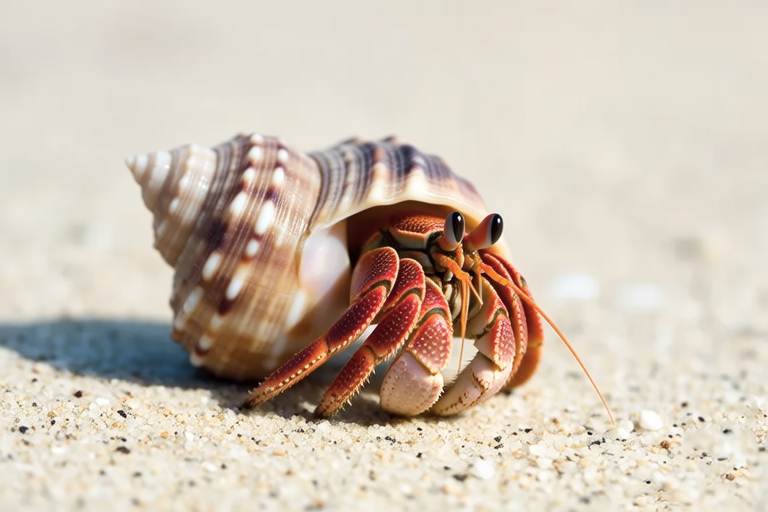
Hermit crabs are fascinating creatures known for their unique lifestyle. Unlike most crustaceans, they do not have a hard shell of their own but instead, they make use of discarded shells from other animals. This adaptation has given them the name ‘hermit,’ as they seem to live a solitary and somewhat reclusive life. Their ability to find and adapt to a wide variety of shells has made them a subject of intrigue for biologists and nature enthusiasts alike. But there is much more to hermit crabs than meets the eye. This article will explore five surprising facts that will change your perspective on these intriguing creatures.
Fact 1: Hermit Crabs Are Not True Crabs
Despite their name and crab-like appearance, hermit crabs are not true crabs. They belong to the superfamily Paguroidea within the infraorder Anomura, which also includes squat lobsters. True crabs, on the other hand, belong to the infraorder Brachyura. The distinction lies in their evolutionary history and physical characteristics. Hermit crabs have longer bodies and legs compared to true crabs, and they lack the thick exoskeleton that true crabs possess. Instead, they rely on borrowed shells for protection, a strategy that has evolved over millions of years. This adaptation is a testament to the ingenuity of nature and highlights the importance of environmental factors in shaping species’ evolution.
Fact 2: Hermit Crabs Are Social Creatures
Contrary to popular belief, hermit crabs are highly social animals. While they do not share the same level of social complexity as primates or cetaceans, they exhibit behaviors that suggest a preference for group living. In the wild, hermit crabs often gather in large groups, particularly during mating seasons. These gatherings are not just for reproduction; they also serve as a means for sharing resources, such as finding new shells. Studies have shown that hermit crabs will actively search for larger shells when in the presence of others, indicating a form of cooperative behavior. Additionally, they engage in shell fights, where smaller crabs try to take over larger shells occupied by bigger crabs. This behavior suggests a complex social hierarchy and communication system, challenging the notion of hermit crabs as solitary creatures.
Fact 3: Hermit Crabs Can Change Their Shell Size
One of the most remarkable abilities of hermit crabs is their capacity to change their shell size. As hermit crabs grow, they outgrow their current shells, necessitating the need for a larger one. This process, known as molting, involves shedding the old exoskeleton and growing a new one. However, the soft, vulnerable state that follows molting makes it dangerous for hermit crabs to venture far in search of a new home. Therefore, they have developed a unique method of shell exchange. When a hermit crab finds a suitable shell, it cautiously approaches, sometimes tapping the shell with its antennae to check if it’s occupied. If the resident crab is smaller, it might abandon its shell in favor of a larger one, creating a chain reaction of shell swapping among several crabs. This intricate dance of shell exchange is a testament to the resourcefulness of hermit crabs and the importance of community in their survival.
Fact 4: Hermit Crabs Have Lungs, Not Gills
Another surprising fact about hermit crabs is that they breathe air, not water, through lungs. This characteristic sets them apart from most other crustaceans, which typically rely on gills to extract oxygen from water. Hermit crabs have adapted to terrestrial life by developing lungs, allowing them to live both in and out of water. However, this adaptation comes with its challenges. Hermit crabs require access to both land and water to survive. They spend most of their time on land, where they can breathe freely, but they must return to water periodically to replenish their body moisture and facilitate respiration. This dual-living requirement makes hermit crabs a unique blend of aquatic and terrestrial animals, highlighting the versatility of their physiology and the adaptability of nature.
Fact 5: Hermit Crabs Can Survive Without a Shell
Perhaps the most astonishing fact about hermit crabs is their ability to survive without a shell. While a shell provides essential protection against predators and harsh environmental conditions, hermit crabs can endure short periods without one. When faced with the loss of their shell, hermit crabs may retreat into their abdomen, curling up tightly to protect their soft underbelly. Although this state makes them extremely vulnerable, it allows them to survive until they can find a new shell. This ability demonstrates the resilience and adaptability of hermit crabs, as well as their remarkable capacity to overcome significant challenges.
Conclusion: Changing Perspectives on Hermit Crabs
The surprising facts about hermit crabs presented here offer a deeper understanding of these creatures and their unique adaptations. From their social behaviors to their lung-based respiration, hermit crabs challenge our preconceived notions about what it means to be a crab. By learning about these fascinating aspects of hermit crab biology, we gain a greater appreciation for the diversity of life on Earth and the incredible ways in which organisms have adapted to their environments. Understanding hermit crabs not only enriches our knowledge of marine biology but also inspires awe and curiosity about the natural world. Next time you encounter a hermit crab, remember that beneath its humble exterior lies a complex, resilient, and truly remarkable creature.
