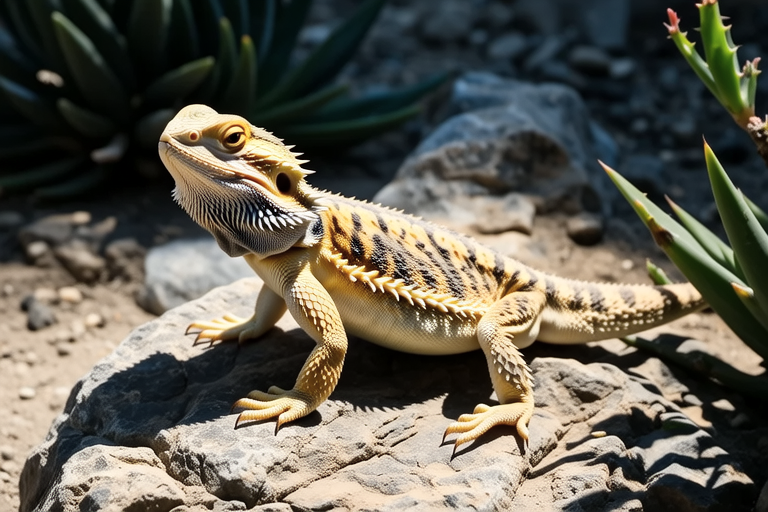
Mind-Blowing Facts About Bearded Dragons That Will Amaze You
Bearded dragons, scientifically known as Pogona vitticeps, have become one of the most popular pets among reptile enthusiasts worldwide. These charismatic lizards are native to Australia, and their unique appearance and gentle demeanor make them ideal companions for both novice and experienced keepers. In this article, we will delve into some fascinating facts about bearded dragons that will surely amaze you.
Natural Habitats
Bearded dragons originate from the arid and semi-arid regions of central Australia, including deserts, shrublands, and woodlands. They thrive in environments with rocky outcrops, trees, and sparse vegetation. Interestingly, these creatures can survive in temperatures ranging from 40°F (4°C) to over 100°F (38°C), showcasing their remarkable adaptability to harsh conditions. Their ability to tolerate extreme heat is one of the reasons why they have been so successful in captivity.
Dietary Habits
Bearded dragons are omnivorous, meaning they consume both plant matter and animal protein. In the wild, their diet consists of insects, flowers, leaves, fruits, and even small vertebrates. Captive bearded dragons typically enjoy a varied diet of crickets, mealworms, waxworms, leafy greens, and vegetables. A well-balanced diet ensures optimal health and longevity for these beloved pets. On average, adult bearded dragons require feeding every other day, while juveniles need daily meals to support their rapid growth.
Communication Methods
Bearded dragons communicate through a variety of physical signals and behaviors. One of the most recognizable traits is their ability to puff out their throat region when threatened or during courtship displays, resembling a beard. This behavior is where they get their name. Additionally, these lizards can change the color of their skin to signal aggression, submission, or stress. For example, darker colors often indicate dominance, while lighter hues suggest submissiveness. They also employ head bobbing and arm waving to convey messages, with males being more active communicators than females.
Temperature Preferences
Maintaining the correct temperature gradient within a bearded dragon’s enclosure is crucial for their overall health and well-being. These reptiles are ectothermic, relying on external sources of heat to regulate their body temperature. Ideally, the basking spot should reach between 95°F and 110°F (35°C – 43°C), while the cooler end of the habitat should remain around 75°F to 85°F (24°C – 29°C). Proper thermoregulation allows bearded dragons to digest food efficiently and maintain strong immune systems.
Growth Stages
Bearded dragons experience several distinct growth stages throughout their lives. Hatchlings, which measure approximately two inches in length, grow rapidly during their first year. By the time they reach adulthood at around 18 months old, they can reach lengths of up to 20 inches. Interestingly, female bearded dragons tend to be slightly larger than males, making it easier to differentiate between genders once they mature. Providing adequate space and nutrition is essential for healthy development.
Unusual Behaviors and Adaptations
Bearded dragons possess numerous intriguing behaviors and adaptations that set them apart from other reptiles. One of the most fascinating traits is their ability to store fat in their tails, which serves as an energy reserve during times of scarcity. Another remarkable adaptation involves their capacity to shed their skin periodically, a process known as ecdysis. During shedding, bearded dragons may become less active and hide for several days until the old skin has fully detached.
Additionally, bearded dragons exhibit a behavior called “arm waving,” wherein they extend one arm slowly in a circular motion. This gesture is thought to serve multiple purposes, including attracting mates, signaling submission, and even expressing discomfort. Another unique behavior is their tendency to bask vertically on rocks or branches, maximizing exposure to sunlight and UVB radiation necessary for calcium absorption.
Fun Trivia and Comparisons
Did you know that bearded dragons can live for up to 10 years if properly cared for? This lifespan is significantly longer compared to many other reptile species commonly kept as pets. Moreover, these lizards possess excellent eyesight and can detect movement from great distances. In fact, their vision is so sharp that they can spot potential prey items from across a room!
Another interesting comparison involves the size difference between male and female bearded dragons. While both sexes grow similarly during early life stages, males eventually develop larger heads and broader bodies. Additionally, males typically display more pronounced “beards” than females, further emphasizing the gender differences.
Conclusion
Bearded dragons are truly remarkable creatures with many fascinating characteristics and behaviors. From their adaptable nature to their unique communication methods, these lizards offer endless opportunities for learning and enjoyment. Whether you’re a seasoned reptile keeper or new to the world of herpetology, there’s always something exciting to discover about bearded dragons. By understanding their needs and providing appropriate care, you can ensure your pet leads a happy and healthy life.
