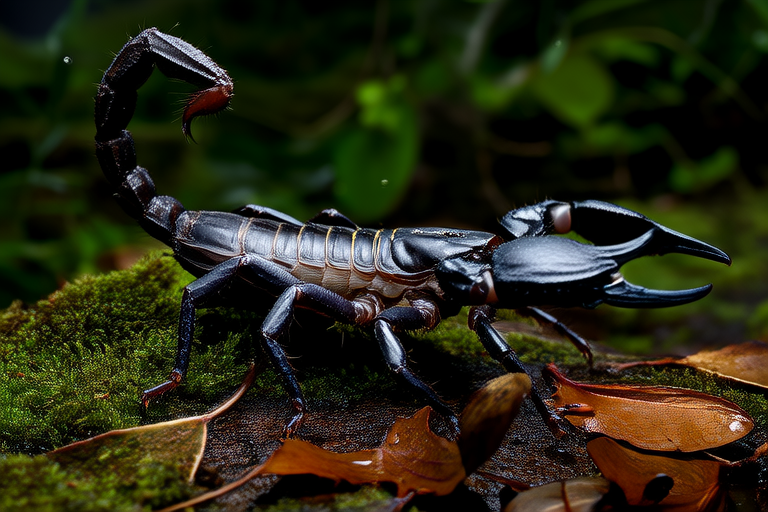
Exploring the Unique Characteristics of Heterometrus Spinifer
The world of scorpions is vast and diverse, with over 2,000 known species. Among them, Heterometrus spinifer stands out as an intriguing but less widely recognized member of the scorpion family. This species offers a fascinating glimpse into the adaptability and complexity of arachnids, making it a subject worthy of exploration for both enthusiasts and casual observers alike.
Physical Attributes and Distinguishing Features
Heterometrus spinifer, commonly referred to as the spiny forest scorpion, boasts a distinctive appearance that sets it apart from other scorpion species. It typically measures around 7 to 10 centimeters in length, with a robust body structure. Its most notable feature is the presence of pronounced spines along the mesosoma (middle section), which give it its name. These spines serve multiple purposes, including defense against predators and possibly aiding in prey capture.
The coloration of Heterometrus spinifer ranges from dark brown to black, providing excellent camouflage in its natural habitat. Its pincers are relatively large compared to its overall size, suggesting that it relies heavily on these appendages for both hunting and defense. The tail, tipped with a venomous stinger, is long and slender, allowing for precise strikes when necessary.
Habitat and Preferred Environment
This species thrives in tropical and subtropical regions, particularly in areas with dense vegetation and high humidity levels. They are often found in forests, where they inhabit crevices in rocks, under logs, or within tree hollows. Their preference for humid environments makes them well-suited to life in the understory of tropical rainforests, where they can find shelter and ample food sources.
In captivity, Heterometrus spinifer requires specific conditions to thrive. A terrarium setup must include a substrate that retains moisture, such as peat moss or coconut fiber, along with plenty of hiding spots like cork bark or artificial caves. Maintaining the right humidity level is crucial, as these scorpions are highly sensitive to dehydration.
Diet and Feeding Habits
The diet of Heterometrus spinifer consists primarily of small insects and other invertebrates. In the wild, they are opportunistic feeders, taking advantage of whatever prey crosses their path. Common items on their menu include crickets, grasshoppers, beetles, and even smaller scorpions. In captivity, they are typically fed a similar diet of commercially available feeder insects.
Interestingly, these scorpions exhibit a unique feeding behavior known as “ambush predation.” Rather than actively pursuing their prey, they remain stationary in strategic locations, waiting for potential meals to come within reach. Once a suitable target approaches, they strike swiftly with their powerful pincers, incapacitating the prey before delivering a venomous sting if necessary.
Reproduction and Life Cycle
The reproductive cycle of Heterometrus spinifer involves several stages. Mating occurs during the rainy season when humidity levels are at their peak. Male and female scorpions engage in a complex courtship dance, involving tactile communication through the use of their pincers. After successful mating, the female carries the fertilized eggs internally for several months until she gives birth to live young.
Newborn scorpions, known as scorplings, emerge from the mother’s body fully formed but incredibly small. They ride on her back for the first few days of life, receiving protection and nourishment. As they grow, the scorplings gradually become independent, venturing out on their own to establish territories and begin hunting.
Myths and Misconceptions
One common myth surrounding Heterometrus spinifer is that its venom is highly dangerous to humans. While all scorpions possess venom, the toxicity varies widely among species. For Heterometrus spinifer, while its sting can be painful and may cause localized swelling, it is generally not considered life-threatening to healthy adults. However, individuals with compromised immune systems or severe allergic reactions should seek medical attention after being stung.
Another misconception is that these scorpions are aggressive and prone to attacking without provocation. In reality, Heterometrus spinifer prefers to avoid confrontation whenever possible. They only resort to defensive behaviors, such as raising their tails or delivering a sting, when they feel threatened or cornered.
Scientific Insights
Recent studies have shed light on the adaptive strategies employed by Heterometrus spinifer. One significant finding is the role of the spines on its mesosoma in reducing water loss. By creating a barrier between the scorpion’s body and the external environment, these spines help maintain optimal hydration levels, especially in arid conditions.
Additionally, researchers have discovered that Heterometrus spinifer
