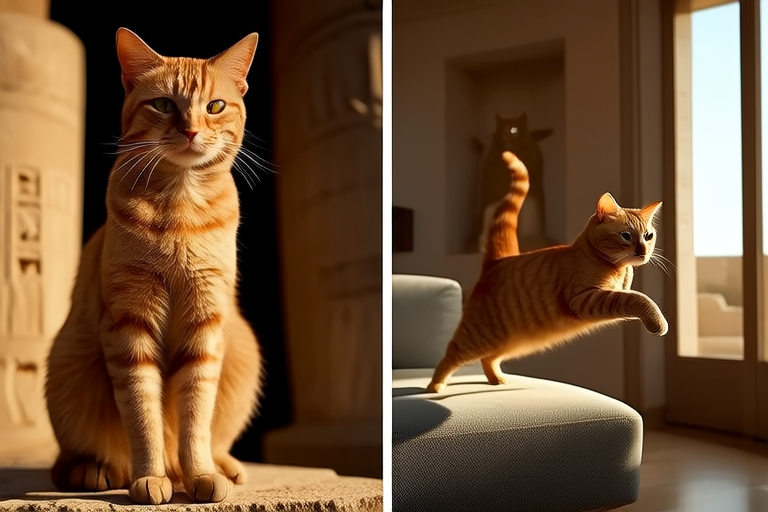
The Historical Journey of Abyssinian Cats: From Temple Animals to Modern Pets
Introduction
The Abyssinian cat is one of the oldest and most captivating breeds in the world, with a rich history that spans thousands of years. Originating from regions near ancient temples in Egypt, these cats have evolved from revered temple animals to beloved companions in modern living rooms. Their striking appearance, unique coat patterns, and friendly demeanor make them a favorite among cat enthusiasts. This article explores the historical journey of Abyssinian cats, their physical characteristics, mythological and historical significance, genetic origins, and their transition from sacred animals to cherished pets.
The Origins and Early History of Abyssinian Cats
The exact origin of Abyssinian cats remains a subject of debate among historians and cat experts. Some believe that these cats originated in ancient Egypt, where they were highly valued for their hunting skills and companionship. The name “Abyssinian” is derived from Abyssinia, the former name for Ethiopia, but this does not necessarily mean the breed originated there. Rather, it was given to the breed due to the mistaken belief that the first known specimens came from this region.
Historical evidence suggests that Abyssinians were indeed present in ancient Egypt, as depicted in various artifacts. They were often shown alongside pharaohs, symbolizing their high status. These early cats were considered sacred and were sometimes mummified after death, buried with great ceremony. This practice highlights their importance in Egyptian society, where they were believed to protect against evil spirits and bring good fortune.
Ancient Egyptian art provides fascinating glimpses into the lives of these cats. Statues, paintings, and hieroglyphics depict sleek, elegant felines with distinctive ticked coats. The cats’ slender bodies, large ears, and almond-shaped eyes are remarkably similar to those of modern Abyssinians, suggesting a long-standing lineage. The Egyptians also believed that cats were divine creatures, associating them with the goddess Bastet, who had the head of a cat. This further elevated the status of cats in their culture.
Mythological and Historical Significance
In addition to their practical roles as hunters and companions, Abyssinian cats held significant mythological and religious importance in ancient Egypt. As mentioned earlier, they were associated with Bastet, a deity linked to fertility, protection, and motherhood. The worship of Bastet involved elaborate rituals and festivals, during which cats were honored and treated with utmost respect. This reverence extended to domesticated cats, which were often kept in temples dedicated to Bastet.
Cats were also believed to possess magical powers, capable of warding off evil spirits and bringing prosperity. This belief persisted even after the decline of ancient Egyptian civilization, influencing cultures across the Mediterranean and beyond. In Greece and Rome, cats were often depicted in art and literature, further cementing their place in human imagination.
During the Middle Ages, however, cats fell out of favor in some parts of Europe due to superstitions and religious beliefs. They were sometimes associated with witchcraft and were persecuted as a result. Fortunately, Abyssinians managed to survive in other parts of the world, particularly in Asia and Africa, where they continued to be valued for their hunting prowess and companionship.
Genetic Origins and Physical Characteristics
The exact genetic origins of Abyssinian cats are still being studied, but recent research suggests that they may share ancestry with wildcats found in East Africa and the Arabian Peninsula. Genetic analysis has revealed similarities between Abyssinians and other breeds, such as the Somali, which further supports the theory of a shared evolutionary history.
Abyssinians are known for their distinct physical traits, including a medium-sized, muscular body; large, pointed ears; and an expressive face with prominent cheekbones. Their most striking feature, however, is their coat, which is characterized by a ticked or agouti pattern. Each hair shaft has bands of color, creating a shimmering effect that gives the cat its distinctive appearance. This coat is typically short and fine, requiring minimal grooming.
The typical Abyssinian coat comes in four recognized colors: ruddy (the original and most common color), cinnamon, blue, and fawn. Ruddy Abyssinians have a warm, reddish-brown base color with black ticking, while cinnamon Abyssinians have a lighter, more golden base with chocolate ticking. Blue Abyssinians have a grayish-blue base with slate ticking, and fawn Abyssinians have a soft beige base with light brown ticking. Other colors exist but are less common and may not be officially recognized by all cat registries.
Transition from Sacred Animals to Beloved Pets
The transition of Abyssinian cats from sacred animals to beloved pets began with the expansion of trade routes and increased cultural exchange between different regions. During the 19th century, European explorers and travelers brought back exotic animals, including cats, from their expeditions to Africa and Asia. These cats were often displayed in zoos or private collections, gradually introducing them to a wider audience.
The first recorded Abyssinian cat in Britain appeared in 1871 at the Crystal Palace Cat Show, where it won a prize. This marked the beginning of the breed’s popularity in Europe, and soon after, Abyssinians were being bred selectively to enhance their desirable traits. The establishment of cat fancier organizations and the creation of breed standards further contributed to the breed’s development.
Abyssinians were introduced to the United States in the early 20th century, where they quickly gained popularity among cat lovers. Today, they are one of the most sought-after breeds, prized for their intelligence, playfulness, and affectionate nature. They are well-suited for families with children and other pets, making them ideal companions for modern households.
Depiction in Ancient Art and Myths
Abyssinian cats have been featured in numerous works of art throughout history, from ancient Egyptian carvings to Renaissance paintings. Their graceful forms and expressive faces made them popular subjects for artists, who often depicted them in scenes of everyday life or mythology. In ancient Egypt, cats were frequently portrayed alongside pharaohs and gods, emphasizing their importance in society.
In Greek and Roman mythology, cats were associated with various deities, including Artemis, the goddess of the hunt, and Diana, her Roman counterpart. These associations further elevated the status of cats in Western culture, contributing to their enduring popularity. Cats were also often depicted in medieval manuscripts and illuminated texts, where they were sometimes used as symbols of mystery and magic.
Throughout history, cats have been celebrated for their agility, intelligence, and independence, qualities that continue to captivate people today. Their ability to adapt to different environments and thrive in various settings has ensured their survival and success over millennia.
Temperament and Care
Abyssinian cats are known for their playful and curious nature, making them excellent companions for active households. They enjoy interactive play and can be trained to perform tricks, which keeps them mentally stimulated. Abyssinians are also highly social and bond closely with their owners, often seeking attention and affection. They tend to be vocal and communicative, using a variety of sounds to express themselves.
Despite their independent streak, Abyssinians are generally friendly and get along well with other pets and children. However, they require regular mental and physical stimulation to prevent boredom and destructive behavior. Providing them with toys, climbing structures, and opportunities for exploration can help satisfy their natural instincts.
Caring for an Abyssinian cat involves regular grooming to maintain their coat’s health and appearance. Although their short fur requires minimal maintenance, brushing once or twice a week can help remove loose hairs and distribute skin oils. Bathing should only be done when necessary, as frequent bathing can strip the coat of its natural oils. Additionally, Abyssinians should have access to clean water and a balanced diet to support their overall health.
Conclusion
The historical journey of Abyssinian cats is a testament to their enduring appeal and adaptability. From their origins in ancient Egypt to their current presence in modern living rooms, these cats have captivated people for centuries with their striking appearance, playful nature, and companionship. Their transition from revered temple animals to beloved pets reflects the changing attitudes towards animals in human societies.
Today, Abyssinians remain popular among cat enthusiasts for their intelligence, playfulness, and affectionate nature. Their unique coat patterns and expressive faces make them stand out in any crowd, while their friendly demeanor ensures they are welcome additions to many households. As we continue to learn more about their genetic origins and history, the story of Abyssinian cats will undoubtedly grow richer and more fascinating.
