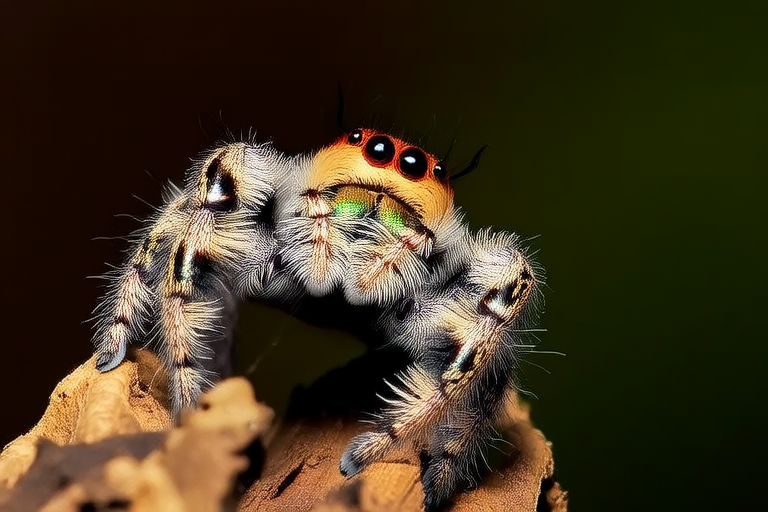
The Top 5 Most Fascinating Facts About Tarantulas That Will Blow Your Mind
Tarantulas, members of the spider family Theraphosidae, are some of the most intriguing creatures on Earth. Known for their large size and hairy appearance, these spiders have captivated humans for centuries. Despite their fearsome reputation, tarantulas are generally harmless to humans and play a crucial role in their ecosystems. With over 900 species found across the globe, from the deserts of North America to the rainforests of South America, tarantulas exhibit a wide range of behaviors and adaptations that make them truly fascinating. This article delves into five mind-blowing facts about tarantulas that will deepen your appreciation for these incredible arachnids.
Fact 1: Tarantulas Can Survive Without Food for Years
One of the most astonishing capabilities of tarantulas is their ability to survive extended periods without food. These resilient spiders can go for months, sometimes even years, between meals. A study published in the journal Biology Letters revealed that certain species can slow down their metabolism significantly during times of scarcity. This adaptation allows them to conserve energy and survive harsh conditions where prey might be scarce. For instance, the Goliath birdeater (Theraphosa blondi), one of the largest tarantulas in the world, can live off a single meal for several months. Their digestive system is highly efficient, extracting as much nutrition as possible from their prey, which often includes insects, small vertebrates, and even other spiders. This survival strategy underscores the tarantula’s remarkable adaptability and resilience in nature.
Fact 2: Tarantulas Have Unique Defense Mechanisms
When it comes to defending themselves, tarantulas have developed a variety of ingenious methods. Perhaps the most well-known defense is their ability to release urticating hairs from their abdomen. These tiny, barbed hairs can cause irritation, itching, and even temporary blindness if they come into contact with the eyes of a predator. In addition to this, some tarantulas can produce a hissing sound by rubbing their mouthparts together, a behavior known as stridulation. This sound serves as a warning to potential threats, much like a rattlesnake’s rattle. Another fascinating defense mechanism involves playing dead; when threatened, some tarantulas will lie motionless, appearing lifeless until the danger has passed. These strategies highlight the complexity of tarantulas’ interactions with their environment and demonstrate their resourcefulness in avoiding predation.
Fact 3: Tarantulas Can Regenerate Lost Limbs
Among the most impressive abilities of tarantulas is their capacity to regenerate lost limbs. When a tarantula loses a leg, it can regrow it during its next molt, a process called autotomy. During molting, the old exoskeleton splits along a preformed line, allowing the spider to emerge with a new, softer exoskeleton underneath. Over time, the new limb grows back gradually, eventually reaching full size. Studies have shown that younger tarantulas tend to regenerate faster and more completely than older ones. This remarkable regeneration process not only aids in survival but also underscores the intricate biological mechanisms at work within these spiders. It’s a testament to the resilience of tarantulas and the wonders of evolutionary biology.
Fact 4: Tarantulas Communicate Through Vibrations
Tarantulas communicate in ways that are both subtle and sophisticated. One of the most fascinating forms of communication among tarantulas is through vibrations. They can sense vibrations on the ground, in webs, and even on their own bodies. By plucking threads in their webs or by drumming their legs on the ground, tarantulas can send signals to potential mates or rivals. These vibrations can convey information about the size, sex, and even reproductive status of the sender. Research conducted by biologists has demonstrated that female tarantulas can distinguish between male suitors based on the specific patterns of vibration they produce. This form of communication highlights the complex social dynamics within tarantula populations and reveals a level of sophistication in their interactions that is often overlooked.
Fact 5: Tarantulas Are Lifespan Champions Among Spiders
Tarantulas boast one of the longest lifespans among all spiders, making them true survivors in the animal kingdom. While most spiders live for only a year or two, tarantulas can live for decades. Some species, such as the Mexican redknee tarantula (Brachypelma smithi), can live up to 30 years in captivity. The longevity of tarantulas is attributed to their relatively low metabolic rate and efficient digestion. In the wild, they face numerous challenges, including predation, environmental changes, and competition for resources, yet they manage to thrive. Their long lifespan is a testament to their adaptability and the robustness of their physiology. This fact makes tarantulas not just fascinating, but also a subject of great interest for scientists studying aging and longevity in animals.
Conclusion: Celebrating the Uniqueness of Tarantulas
Tarantulas are truly extraordinary creatures, each fact revealing another layer of complexity and wonder. From their ability to survive without food for years to their unique defense mechanisms and communication styles, these spiders continue to amaze us with their adaptability and resilience. Their capacity to regenerate lost limbs and their impressive lifespans further underscore their place as some of the most fascinating animals on our planet. As we continue to explore the world of arachnology, there is always more to learn about these remarkable creatures. Whether you’re a seasoned biologist or simply someone who appreciates the natural world, tarantulas offer endless opportunities for discovery and admiration. So, the next time you encounter a tarantula, take a moment to appreciate the marvels of evolution and the incredible diversity of life on Earth.
