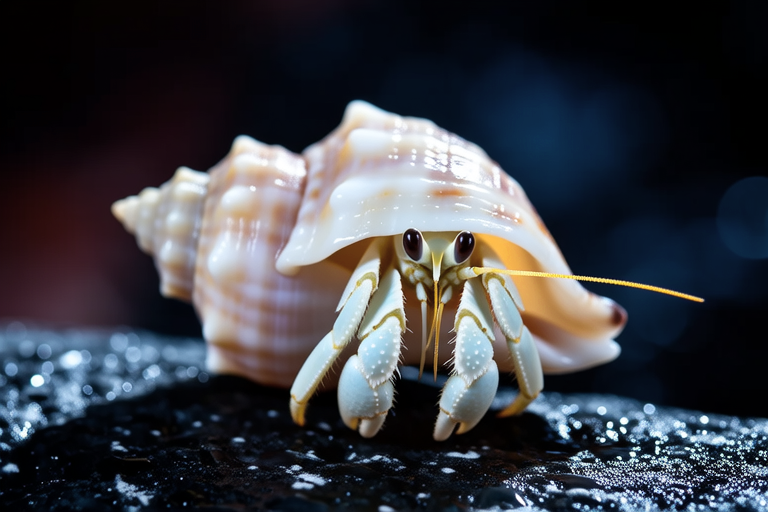
Peek into the Mini World of Pea Crabs
In the vast ocean, where giant whales and colorful fish roam, there exists a minuscule world teeming with life. Among these small inhabitants are pea crabs, one of the tiniest crab species that live in a world unseen by many. These crabs, named for their resemblance to a pea, have fascinating life cycles, unique habitats, and remarkable adaptations. This article delves into the captivating world of pea crabs, exploring their symbiotic relationships, recent scientific discoveries, and conservation efforts.
The Life Cycle of Pea Crabs
The life cycle of pea crabs begins with eggs laid by adult females in the spring. These eggs hatch into larvae that drift in the open sea, feeding on plankton and growing until they reach a certain size. Once mature enough, the larvae seek out hosts, typically barnacles, where they will spend the rest of their lives. The larvae enter through the barnacle’s opening and settle inside its shell, becoming permanent residents. Inside, they undergo metamorphosis, transforming from larvae into juvenile crabs. As they grow, they molt several times, shedding their exoskeletons to accommodate their increasing size. Adult pea crabs can live for several years, continuing this cycle of reproduction and host-seeking.
Habitats and Adaptations
Pea crabs are found in various marine environments worldwide, from shallow coastal waters to deep-sea trenches. Their preferred habitat is the interior of barnacles, where they find protection and food. To thrive in this confined space, pea crabs have adapted their bodies to fit snugly within the barnacle’s shell. They possess flattened bodies, allowing them to maneuver easily within the tight confines. Additionally, their legs are modified for gripping the inside of the barnacle, ensuring they remain secure during rough seas.
Barnacles are sessile organisms, meaning they attach themselves to surfaces and do not move. This immobility makes them vulnerable to predators, but the presence of pea crabs offers them some protection. By living within the barnacle, pea crabs can defend their host from potential threats, making this symbiotic relationship mutually beneficial. Moreover, pea crabs can survive in environments with varying salinity levels, allowing them to adapt to different water conditions.
Symbiotic Relationships
The most striking aspect of pea crabs is their symbiotic relationship with barnacles. This relationship is known as obligate commensalism, where the pea crab benefits significantly, while the barnacle neither benefits nor suffers. The barnacle provides shelter and a constant supply of food, primarily consisting of the plankton filtered by the barnacle. In return, the pea crab helps protect the barnacle from potential predators, such as fish and starfish, which may attempt to pry open the barnacle’s shell.
Recent studies have revealed that pea crabs also assist in the reproductive success of their hosts. By consuming excess nutrients, they prevent the buildup of harmful bacteria that could infect the barnacle. This cleaning mechanism ensures the health of both the barnacle and the pea crab, highlighting the intricate balance of this symbiotic relationship.
Scientific Discoveries
Advancements in technology have enabled scientists to study pea crabs more closely, leading to significant discoveries about their biology and behavior. Researchers have utilized microscopes and underwater cameras to observe the internal lives of pea crabs within their barnacle hosts. These tools have provided insights into the daily activities of pea crabs, including their feeding habits and interactions with their environment.
A recent discovery involves the genetic makeup of pea crabs, which has been linked to their ability to withstand harsh environmental conditions. Scientists have identified specific genes responsible for stress resistance, enabling pea crabs to thrive in areas with fluctuating temperatures and salinity levels. Understanding these genetic factors could lead to breakthroughs in biotechnology and medicine, as researchers explore the potential applications of pea crab resilience.
Conservation Efforts
Despite their small size, pea crabs play a crucial role in marine ecosystems. Their symbiotic relationship with barnacles contributes to the overall health and stability of coastal environments. However, like many marine species, pea crabs face threats from human activities, including pollution, climate change, and overfishing. Conservation efforts focus on protecting the habitats of both pea crabs and their barnacle hosts, ensuring the survival of these vital symbiotic pairs.
Efforts to conserve pea crabs include the establishment of marine protected areas, where fishing and other human activities are restricted. These protected zones provide safe havens for pea crabs and their hosts, allowing populations to recover and thrive. Additionally, public awareness campaigns aim to educate people about the importance of pea crabs and their role in marine ecosystems, encouraging responsible behaviors and sustainable practices.
Conclusion
The world of pea crabs is a miniature marvel, filled with unique adaptations and intricate relationships. From their fascinating life cycle to their symbiotic partnership with barnacles, these tiny crustaceans offer a glimpse into the complex and interconnected nature of marine life. Recent scientific discoveries continue to unravel the mysteries surrounding pea crabs, while conservation efforts strive to protect their habitats and ensure their survival. By appreciating the significance of these small creatures, we can better understand and preserve the delicate balance of our oceans.
