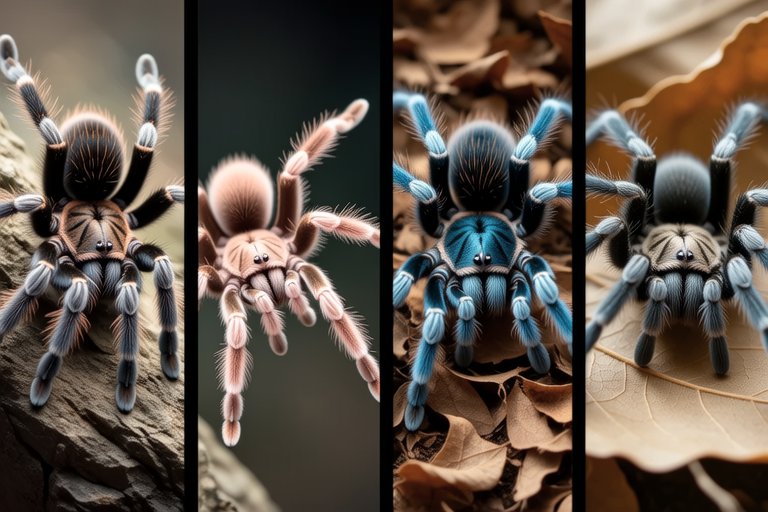
Top 5 Myths About Tarantulas Debunked
Tarantulas, members of the family Theraphosidae, are some of the most misunderstood creatures in the animal kingdom. With over 900 species distributed across various habitats from deserts to rainforests, they exhibit remarkable diversity in size, coloration, and behavior. Despite their fearsome reputation, many people harbor misconceptions about these fascinating spiders. This article aims to shed light on the truth behind five of the most prevalent myths surrounding tarantulas, offering insights into their true nature.
Myth 1: All Tarantulas Are Deadly Venomous
The Myth: Many believe that tarantulas are highly venomous and pose a significant threat to humans. This fear stems from their large size and intimidating appearance.
The Reality: While tarantulas can deliver a painful bite, their venom is generally no more dangerous than a bee sting. The venom primarily affects their prey, incapacitating small insects and other arthropods. Human reactions vary, but most bites result in localized pain, swelling, and redness, similar to a bee sting. In rare cases, individuals with allergies may experience more severe reactions, but this is uncommon. Tarantulas have no interest in attacking humans; they are primarily defensive and will avoid confrontation if possible.
Myth 2: Tarantulas Hunt Humans
The Myth: There’s a widespread belief that tarantulas actively hunt humans as prey.
The Reality: This notion is entirely unfounded. Tarantulas are opportunistic hunters, preying on insects, small vertebrates, and other invertebrates. Their diet consists of creatures that are much smaller than themselves, and they lack the physical capabilities necessary to pursue or capture larger animals like humans. Their hunting strategy involves ambush or stalking, using vibrations to detect potential prey within their immediate environment. Humans are simply too large and fast for tarantulas to consider as food.
Myth 3: Tarantulas Always Carry Silk on Their Backs
The Myth: One of the most visually striking features of tarantulas is the hair-like structures on their abdomen. Many assume these hairs are silk used for web-making.
The Reality: These specialized hairs, known as urticating hairs, are not silk. They serve as a defense mechanism, detaching easily when the spider feels threatened. When released, these hairs can cause irritation to predators’ skin and eyes. Not all tarantulas possess these hairs; species from certain regions, particularly those from Central and South America, rely heavily on them for defense. In contrast, tarantulas from other parts of the world, such as Africa and Asia, may not have urticating hairs and instead rely on biting or fleeing as defense mechanisms.
Myth 4: Tarantulas Cannot Be Kept as Pets
The Myth: The idea persists that tarantulas are too dangerous or difficult to care for as pets.
The Reality: With proper knowledge and care, tarantulas can make excellent pets for experienced hobbyists. Many species are docile and can be handled with caution. It’s crucial to research specific care requirements for the species you’re interested in, including temperature, humidity, and diet. Providing the right habitat ensures the health and longevity of your pet. Handling should be done carefully, respecting the tarantula’s space and avoiding sudden movements. Responsible ownership requires commitment and respect for these unique animals.
Myth 5: Tarantulas Are Completely Blind
The Myth: Tarantulas are often thought to be completely blind due to their lack of prominent eyes.
The Reality: While tarantulas don’t see as well as humans, they are far from blind. They possess eight eyes arranged in two rows on the front of their cephalothorax. These eyes help them detect movement and changes in light levels, which is sufficient for their nocturnal lifestyle. Additionally, tarantulas rely heavily on their other senses, particularly their ability to sense vibrations through the ground. Their legs are equipped with sensitive hairs that can pick up even the slightest tremors, allowing them to navigate their environment effectively without needing acute vision.
Conclusion
Understanding tarantulas accurately is crucial for appreciating their role in ecosystems and dispelling the myths that surround them. From debunking the notion that they are deadly venomous to recognizing their complex sensory abilities, each revelation brings us closer to comprehending these remarkable creatures. By fostering a deeper understanding of tarantulas, we can appreciate their ecological significance and contribute to their conservation. Encouraging further exploration into tarantula biology not only enriches our knowledge but also promotes a healthier relationship with these often-misunderstood arachnids.
