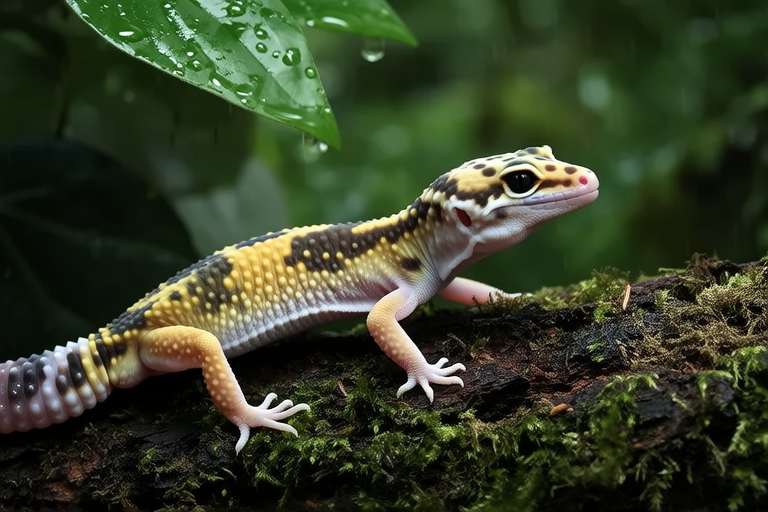
Chameleon Colors: A Journey Through the Spectrum
The chameleon is a fascinating creature renowned for its remarkable ability to change colors. From vibrant neon greens to rich earthy browns, these reptiles offer a captivating display of hues that have intrigued scientists and nature enthusiasts alike. This article delves into the diverse color spectrum of chameleons, exploring the biological mechanisms behind their color-changing abilities, their uses in communication, camouflage, and temperature regulation, as well as the environmental factors that influence these changes.
The Color Spectrum of Chameleons
Chameleons exhibit an impressive range of colors, from the striking neon greens of the Chamaeleo calyptratus (veiled chameleon) to the more subdued earthy browns and grays of the Bradypodion telfairi (Telfair’s skink). Some species, like the Calumma ambreense, can even display a mesmerizing array of blues and purples. The diversity in their color palette is not just visually appealing but also serves multiple purposes essential to their survival.
Biological Mechanisms Behind Color Change
The primary mechanism responsible for chameleons’ color-changing abilities lies within specialized cells called chromatophores and iridophores. Chromatophores are pigment-containing cells located in the upper layers of the chameleon’s skin. These cells contain pigments such as xanthophores (yellow), erythrophores (red), and melanophores (black or brown). When stimulated, these cells expand or contract, altering the visible color of the skin.
Iridophores, on the other hand, are cells that contain guanine crystals, which reflect light. By adjusting the spacing between these crystals, iridophores can produce a wide range of structural colors, including blues, greens, and even iridescent hues. This process allows chameleons to display complex patterns and colors without relying solely on pigments.
Uses of Color Changes
Communication
Color changes play a crucial role in chameleon communication. Males often display vivid colors during courtship rituals to attract females. For example, male Chamaeleo calyptratus may show bright yellow and orange hues when courting a potential mate. Additionally, color changes can indicate aggression or submission. When threatened, some species, like the Calumma parsonii (Parson’s chameleon), may turn dark and display bold patterns to ward off predators or competitors.
Camouflage
Chameleons utilize color changes for effective camouflage, blending seamlessly into their surroundings. This adaptation helps them avoid detection by both predators and prey. For instance, the Furcifer oustaleti (Oustalet’s chameleon) can shift its color to match the bark of trees or the leaves it rests upon, making it nearly invisible to observers. This camouflage is particularly useful in dense forests where quick concealment can mean the difference between life and death.
Temperature Regulation
Color changes also assist chameleons in regulating their body temperature. Darker colors absorb more heat, while lighter colors reflect it. By changing their color, chameleons can control how much sunlight they absorb, allowing them to thermoregulate efficiently. This is especially important for species living in arid environments, where maintaining optimal body temperature is critical for survival.
Environmental Factors Influencing Color Changes
Several environmental factors can trigger or influence a chameleon’s color changes. Light intensity, humidity, and temperature all play significant roles. Increased light intensity may prompt chameleons to darken their color to reduce heat absorption, while lower temperatures might encourage them to display lighter colors to maximize warmth. Humidity levels can also affect coloration; higher humidity can lead to more pronounced color changes due to increased hydration and metabolic activity.
Furthermore, social interactions and the presence of conspecifics can stimulate color changes. In group settings, chameleons may alter their appearance to signal dominance, submission, or readiness to mate. These social cues are vital for maintaining harmony within chameleon populations and ensuring successful reproduction.
Species-Specific Color Displays
Different chameleon species have evolved unique color displays tailored to their specific ecological niches. The Calumma vatosoa, endemic to Madagascar, showcases an extraordinary blend of blues, greens, and yellows, reflecting its forest habitat. In contrast, the Trioceros jacksonii xantholirais (Jackson’s chameleon), native to Kenya and Tanzania, often exhibits a striking combination of greens and yellows, adapted to the lush vegetation of its home.
The Calumma rubella (red-nosed chameleon) from Madagascar features a distinctive red nose, which is thought to aid in attracting mates and signaling territorial boundaries. Meanwhile, the Chamaeleo gracilis (common chameleon) of southern Africa displays a variety of greens, browns, and blacks, perfectly suited for its grassland environment.
The Importance of Preserving Chameleon Habitats
To ensure the continued existence of these colorful marvels, it is crucial to preserve their natural habitats. Deforestation, urbanization, and climate change pose significant threats to chameleon populations worldwide. By protecting their ecosystems, we can safeguard the biodiversity that supports these incredible creatures.
Conservation efforts should focus on creating protected areas, promoting sustainable land use practices, and raising awareness about the importance of preserving wildlife habitats. Additionally, supporting scientific research and monitoring programs can provide valuable insights into chameleon behavior and ecology, helping to inform conservation strategies.
In conclusion, chameleons’ color-changing abilities are a testament to the wonders of evolution and adaptation. Their diverse color spectrum serves multiple purposes, from communication and camouflage to temperature regulation. Understanding these mechanisms and the environmental factors that influence them is key to appreciating the complexity of chameleon biology and ecology. By preserving their habitats, we can ensure that future generations will continue to marvel at the vibrant world of chameleons.
