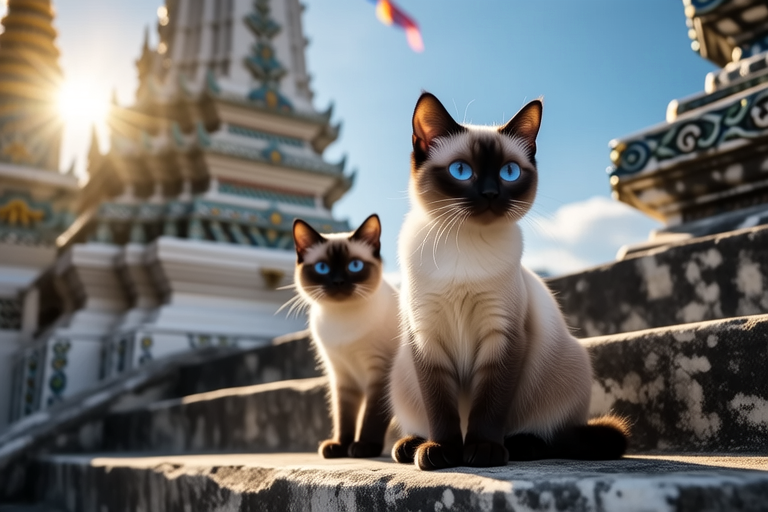
The Historical Origins and Evolution of Siamese Cats
The Siamese cat, a breed known for its striking blue almond-shaped eyes, sleek coat, and pointed coloration, has a rich history that traces back to ancient Siam, now known as Thailand. These elegant felines have long been revered in their native land, where they were considered sacred and served as temple guardians. This article explores the historical origins of Siamese cats, their cultural significance, and their transformation from revered temple guardians to cherished pets around the world.
Cultural Significance and Depiction in Local Folklore
In ancient Siam, Siamese cats were believed to possess mystical powers and were often kept in temples as protectors of sacred relics. Their association with royalty and religious institutions endowed them with an aura of sanctity. According to local folklore, the first Siamese cats were gifts to the King of Siam by the Buddhist monks of Wat Mahathat, one of the most important monasteries in Ayutthaya. The cats were said to be entrusted with guarding the Buddha’s image, ensuring its safety from theft and destruction. Their duty was to sit beside the statue and use their tails to keep away any mischievous spirits or intruders.
Siamese cats also played a significant role in the mythology of Siam. One popular legend tells the story of a princess who fell in love with a prince from another kingdom. When her father refused to allow the marriage, she turned to the Siamese cats for help. The cats used their magical abilities to transport her to the prince’s palace, where they lived happily ever after. This tale underscores the belief in the supernatural powers of Siamese cats and their ability to transcend boundaries.
Evolution from Sacred Beings to Royal Pets
The status of Siamese cats shifted from sacred beings to royal pets during the Ayutthaya period (1350-1767). As the Kingdom of Siam expanded its influence and wealth, the nobility began to keep Siamese cats as symbols of their power and prestige. The cats were given luxurious living conditions and were often pampered with the finest foods and accessories. They were also considered to be good luck charms and were believed to bring prosperity to their owners.
The spread of Siamese cats beyond Thai borders can be traced to key historical events and figures. In the late 19th century, Siamese cats were introduced to Europe when a pair was gifted to the British Consul-General in Bangkok. The cats quickly gained popularity among the aristocracy and were soon being exhibited at cat shows across the continent. Their distinctive appearance and charming personalities made them a favorite among cat enthusiasts.
Genetic Traits and Physical Characteristics
Siamese cats are known for their unique genetic traits and physical characteristics that contribute to their global appeal. They have a lean, muscular build and a short, fine coat that is typically a light cream color with darker points on the ears, face, paws, and tail. This pointed coloration is the result of a temperature-sensitive gene that causes dark pigment to accumulate in cooler areas of the body. Siamese cats also have large, expressive blue eyes and a wedge-shaped head.
Their vocalization is another notable trait. Siamese cats are known for their loud, persistent meows and are often described as “chatty.” This vocalization is believed to be an evolutionary adaptation that helped them communicate with humans in their native environment. Their intelligence and social nature also make them excellent companions, and they are often referred to as “dog-like” due to their loyalty and affectionate behavior.
Adaptation Challenges and Successes in Modern Households
The transition of Siamese cats from temple guardians to household pets has not always been smooth. While they have adapted well to modern living conditions, there are still some challenges that owners need to be aware of. Siamese cats require a stimulating environment to prevent boredom and destructive behavior. They are highly intelligent and enjoy interactive play, so providing them with toys and puzzles can help keep them mentally engaged.
Diet and care are also important considerations for Siamese cat owners. These cats are prone to obesity if overfed, so it is essential to monitor their food intake and provide them with a balanced diet. Regular grooming is necessary to maintain their sleek coats, and routine veterinary check-ups are recommended to ensure their overall health.
Veterinary experts and cat behaviorists suggest that Siamese cats are generally healthy but may be predisposed to certain medical conditions. They are more susceptible to dental problems, heart disease, and respiratory issues. Early intervention and proper care can help mitigate these risks. Additionally, Siamese cats tend to be sensitive to stress and environmental changes, so it is crucial to create a calm and stable home environment for them.
Enduring Appeal in Contemporary Pet Culture
The enduring appeal of Siamese cats in contemporary pet culture is reflected in their frequent appearances in literature, media, and art. From classic children’s books like “The Incredible Journey” to popular TV shows and movies, Siamese cats have captivated audiences with their beauty and charm. Their distinctive appearance and personalities make them ideal subjects for artists and photographers, and they continue to inspire creativity in various forms of media.
In conclusion, the historical origins and evolution of Siamese cats reveal a fascinating journey from sacred temple guardians to beloved pets. Their cultural significance, unique genetic traits, and enduring appeal in contemporary pet culture highlight the special place they hold in the hearts of cat lovers worldwide. As we continue to learn more about these remarkable creatures, their legacy as symbols of grace, intelligence, and companionship will undoubtedly endure for generations to come.
